
Table of Contents
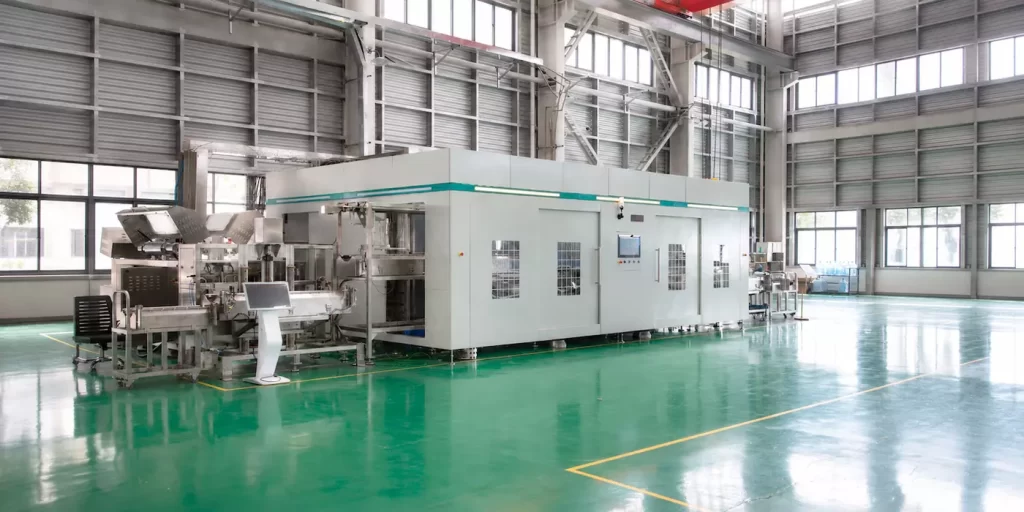
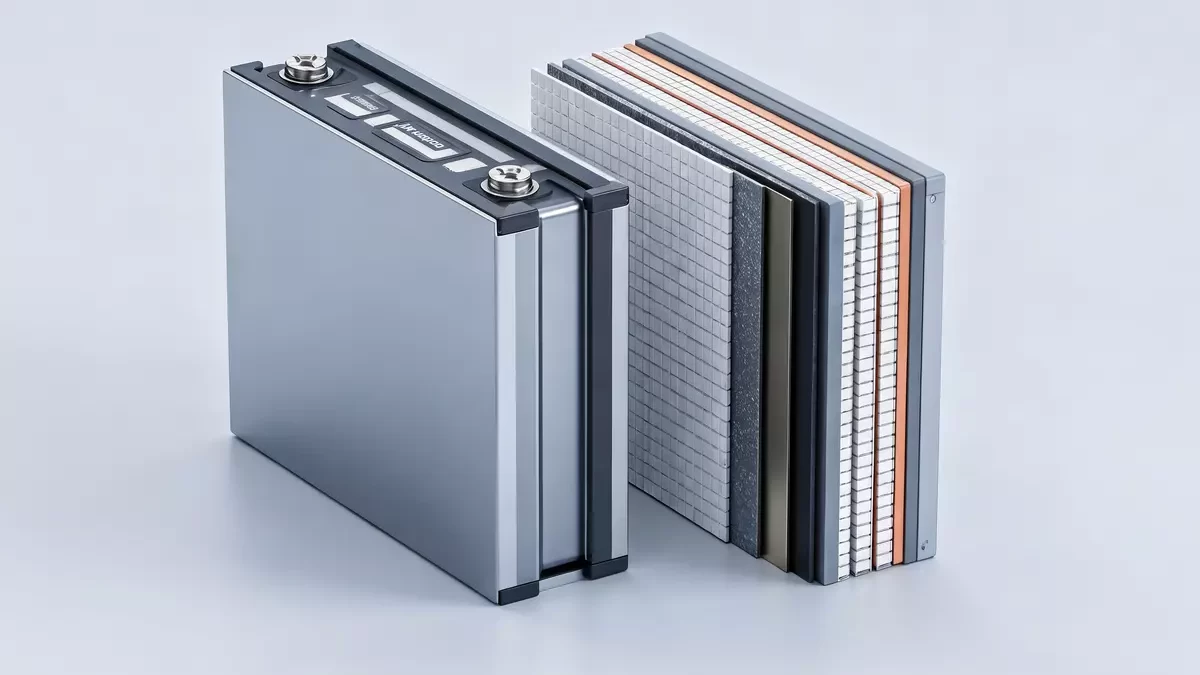
The development of All-Solid-State Battery technology has moved rapidly from laboratory research toward pilot-scale manufacturing. Solid electrolytes have demonstrated significant potential for improving energy density, safety, and electrochemical performance compared with conventional liquid-electrolyte batteries.
However, turning promising laboratory cells into consistent, high-capacity commercial batteries remains a major challenge.
The critical issue is increasingly shifting from what materials can achieve to how those materials can be processed consistently at scale.
As cell capacity increases from laboratory-level samples to 100 Ah and beyond, microscopic defects that may have little impact on small cells can become major sources of performance degradation, yield loss, and inconsistency. Among these challenges, the contact and densification of solid-solid interfaces have become particularly important.
This is where warm isostatic pressing and the emerging solid-balanced warm isostatic pressing process can provide a potential pathway for improving the manufacturing consistency of All-Solid-State Battery cells.
From Material Innovation to Manufacturing Reality
For years, solid-state battery development has focused heavily on solid electrolyte materials.
Oxide, sulfide, and polymer-based solid electrolytes have all attracted significant attention because of their potential to enable high energy density, improved safety, and long-term electrochemical stability.
Laboratory-scale cells can demonstrate impressive results. However, laboratory performance does not automatically translate into mass production.
When battery cells become larger and manufacturing conditions become more complex, several problems become increasingly difficult to control:
- Non-uniform material density
- Microscopic voids inside the cell
- Poor contact between electrodes and solid electrolyte
- Increased interfacial resistance
- Cell-to-cell variation
- Difficulties maintaining stable manufacturing yields
This creates an important shift in the industry’s manufacturing priorities.
The challenge is no longer simply developing a high-performance solid electrolyte. It is creating a repeatable manufacturing process that can reproduce the same performance across thousands or millions of cells.
The Solid-Solid Interface: A Critical Manufacturing Challenge
Liquid-electrolyte batteries benefit from the fluid characteristics of their electrolyte. Liquid electrolyte can penetrate pores, wet electrode surfaces, and fill microscopic gaps during cell assembly.
An All-Solid-State Battery operates under fundamentally different conditions.
The cathode, solid electrolyte, and anode are all solid materials. Instead of liquid filling microscopic gaps, the interfaces must be physically compressed and maintained in close contact.
At the macroscopic level, the cell may appear well assembled. At the microscopic level, however, small gaps and pores can remain between solid particles and material layers.
These microscopic defects can contribute to several problems:
Increased Interfacial Resistance
Poor contact between the electrode and solid electrolyte reduces the effective contact area and increases resistance at the interface. As a result, the actual electrochemical performance of a large cell may fall significantly below laboratory expectations.
Localized Stress and Structural Defects
Uneven pressure distribution can create localized high-stress areas while leaving other regions insufficiently compressed. As cell dimensions increase, these differences become increasingly difficult to control.
Potential Pathways for Internal Failure
Voids, cracks, and non-uniform interfaces can become structural weak points within the cell. Depending on the materials and operating conditions, these defects may contribute to degradation and internal failure mechanisms.
Therefore, improving the solid-solid interface is not simply a material problem. It is also a pressure-processing and manufacturing problem.
Why Conventional Pressing Processes Face Scaling Challenges
Traditional mechanical processes such as uniaxial pressing, calendering, and conventional hot pressing can provide effective densification in specific manufacturing stages.
However, these methods typically apply force from one or more defined directions.
This can create a pressure gradient within the material.
The closer a region is to the pressing surface, the greater the applied mechanical influence may be. Areas farther away can experience different stress conditions.
For small laboratory samples, these differences may remain manageable.
For larger battery cells, however, the consequences can become more significant:
- Density gradients can develop across the cell.
- Some interfaces may receive insufficient pressure.
- Larger cell dimensions amplify local defects.
- Process parameters become more difficult to transfer from laboratory to pilot production.
- Cell-to-cell consistency becomes harder to maintain.
This creates a fundamental manufacturing question:
How can pressure be distributed more uniformly throughout a large and complex solid-state battery structure?
Warm Isostatic Pressing: From Point Contact to Uniform Interface Contact
Warm Isostatic Pressing provides a different approach to densification.
Instead of relying primarily on mechanical force from a single direction, isostatic pressing uses a fluid pressure medium to transmit pressure around the workpiece.
The result is a more uniform pressure environment in which the packaged battery cell can receive pressure from multiple directions.
For solid-state battery manufacturing, this principle can help address the microscopic contact problem between solid materials.
A typical process can combine controlled temperature and high isostatic pressure. For example, a process window of approximately 80–150°C and 400–600 MPa can be configured according to the materials, packaging structure, and process requirements.
Under controlled conditions, the cell can undergo more uniform compression throughout its volume.
Potential Benefits for All-Solid-State Battery Manufacturing
1. Improved Densification
Microscopic voids can be compressed and reduced, increasing the overall density and structural uniformity of the cell.
2. Improved Solid-Solid Contact
Closer contact between electrode materials and solid electrolyte can increase the effective interfacial contact area and potentially reduce interfacial resistance.
3. More Uniform Electrolyte Structure
More consistent compression can help improve the density and uniformity of the solid electrolyte layer.
4. Improved Process Consistency
Because pressure is applied more uniformly, the process can reduce the influence of pressure gradients associated with conventional directional pressing.
In practical manufacturing, density control is closely related to material mass and volume. More uniform pressure distribution can therefore become an important part of controlling the final structural density of solid-state battery components.
Solid-Balanced Warm Isostatic Pressing: Connecting R&D, Pilot Production, and GWh Manufacturing
The next challenge is not simply achieving high pressure. It is achieving repeatable pressure, temperature, cycle time, and process control at different production scales.
This is where Solid-Balanced Warm Isostatic Pressing can become an important equipment concept for All-Solid-State Battery manufacturing.
Rather than treating laboratory development, pilot production, and industrial manufacturing as completely separate processes, the equipment should be designed around a scalable and transferable process architecture.
A practical system needs to address several factors simultaneously:
Pressure Control
High pressure must be accurately controlled throughout the processing cycle. The target pressure should be reproducible from batch to batch rather than simply reaching a maximum pressure value.
Temperature Control
Temperature has a direct influence on material behavior, interface contact, and densification. A controlled thermal environment allows manufacturers to establish repeatable processing windows for different solid electrolyte systems.
Chamber Configuration
Different cell formats and production stages require different chamber volumes. Laboratory equipment may prioritize flexibility and small sample volumes, while pilot and production systems require larger working capacities and higher throughput.
Process Transferability
One of the most important requirements is the ability to transfer validated process parameters from R&D to pilot production and eventually to mass manufacturing.
For example, a laboratory-scale process developed using an approximately 8 L chamber should provide a foundation for developing equivalent process curves for larger pilot and industrial systems.
This approach can help reduce the gap between:
Laboratory → Pilot Production → Industrial Production → GWh-Scale Manufacturing
The objective is not simply to build a larger machine.
The objective is to build a scalable manufacturing process.
One Equipment Platform for Different Solid Electrolyte Systems
Another advantage of a flexible Warm Isostatic Pressing platform is its potential compatibility with different solid electrolyte technologies.
Depending on the equipment configuration and validated process parameters, the technology can be adapted to different material systems, including:
- Sulfide-based solid electrolytes
- Oxide-based solid electrolytes
- Polymer-based solid electrolytes
- Solid-state battery electrode composites
- Other advanced energy-storage materials
This flexibility is important because the All-Solid-State Battery industry is not following a single material pathway.
Different manufacturers may adopt different electrolyte chemistries, electrode compositions, cell structures, and packaging technologies.
Therefore, equipment flexibility can become just as important as maximum pressure capability.
A scalable system should allow manufacturers to optimize pressure, temperature, holding time, chamber volume, and other process parameters according to the specific battery architecture.
From Laboratory Results to Industrial Production
The commercialization of All-Solid-State Battery technology will ultimately depend on more than material performance.
A successful manufacturing process needs to balance:
Performance + Consistency + Yield + Throughput + Process Control
This is why the role of advanced pressure-processing equipment is becoming increasingly important.
Warm Isostatic Pressing can provide a controlled environment for studying how pressure and temperature affect solid-solid interfaces. Once the process window has been validated at laboratory scale, the same principles can be progressively transferred to larger systems.
For battery manufacturers, this provides a clear and scalable path from material development and laboratory validation through Warm Isostatic Pressing process optimization and pilot-scale validation, ultimately supporting production qualification and GWh-scale manufacturing. By connecting each stage of development, manufacturers can improve process consistency, reduce scale-up challenges, and build a more reliable manufacturing pathway for All-Solid-State Battery production.
The closer these stages can be connected, the lower the risk of discovering major process inconsistencies during late-stage scale-up.
Conclusion: The Next Breakthrough May Come from Process Engineering
The future of the All-Solid-State Battery industry will not be determined by materials alone.
Solid electrolytes remain fundamental to the technology, but converting their laboratory potential into commercially viable cells requires reliable manufacturing processes capable of controlling interfaces, density, uniformity, and repeatability.
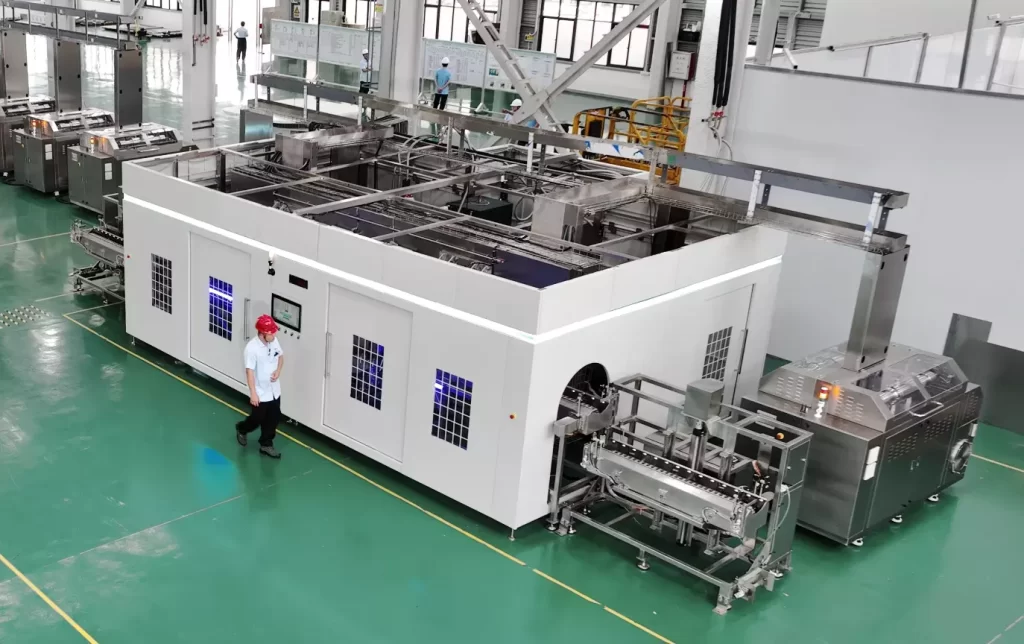
Warm Isostatic Pressing offers a pressure-processing approach for improving solid-solid contact and achieving more uniform densification. Meanwhile, Solid-Balanced Warm Isostatic Pressing represents a broader equipment and process-development concept focused on connecting laboratory research with pilot-scale and industrial manufacturing.
The next stage of solid-state battery development is therefore likely to depend increasingly on the integration of materials science, pressure technology, thermal control, equipment engineering, and scalable manufacturing.
The key question is no longer simply:
“Can we make a high-performance solid-state battery?”
It is:
“Can we manufacture that same high-performance battery consistently, efficiently, and at industrial scale?”
That is where advanced Warm Isostatic Pressing technology can become an important part of the path from laboratory innovation to commercial All-Solid-State Battery production.
