
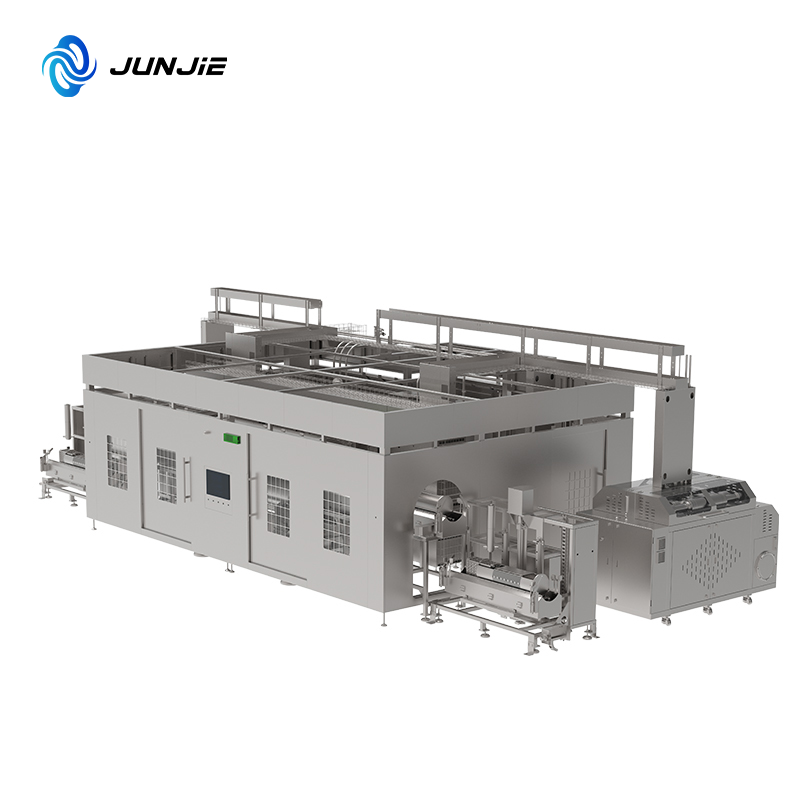
Horizontal WIP System

600 MPa + 150°C WIP technology for uniform densification, enhanced interfaces, and reliable solid-state battery performance.

  1. Home
  2. Products
  3. WIP-525L Horizontal Warm Isostatic Pressing System

WIP-525L Horizontal Warm Isostatic Pressing System

WIP-525

Built for large-scale solid-state battery production, this 600 MPa + 150°C horizontal WIP system enables high-temperature and high-pressure densification to achieve uniform density, enhanced interfaces, and reliable battery performance.

Designed for large-scale solid-state battery production, this 600 MPa + 150°C horizontal flagship system uses water/oil as the pressure medium. Its high-temperature and high-pressure synergistic densification technology solves key issues such as uneven density and residual interface pores in conventional molding, providing essential support for solid-state battery commercialization.

  • Horizontal Automated Design: Equipped with front and rear robotic systems for fully automated loading and unloading, enabling unmanned operation throughout the process. With a cycle time of only 7.9 minutes, it matches continuous production requirements and significantly improves manufacturing efficiency.
  • Dual-Screen Intelligent Control: A user-friendly HMI system with dual-screen display supports multiple operation modes, including automatic, manual, and system cleaning. Integrated SCADA monitoring and data recording enable precise process control, easy operation, and full traceability.
  • Ultra-High Pressure Precision Drive: Powered by 12 synchronized intensifiers, the system improves efficiency by 30%. The 65Mn steel wire-wound frame and forged alloy steel pressure-bearing structure provide excellent fatigue resistance and long-term operational reliability.
  • Long Service Life & Low Maintenance: High-durability sealing systems and modular chamber design extend equipment lifetime and reduce maintenance frequency. Heavy-duty frames and stainless-steel protection structures ensure stable and precise operation over long production cycles.
  • Safe Operation Under Various Conditions: The stainless-steel structure with explosion-resistant protection provides corrosion resistance and adaptability to wide-temperature production environments. Dual pressure monitoring and precise pressure-medium control systems ensure safer and more stable operation.

Model No.: WIP-525

Brand: JUNJIE

Volume: 525L

Pressure Range: 0-600MPa

Power System: 12 pressurizers with 830 KW

Power Supply: AC 380V, 50Hz

Production Capacity: 2.27 t/h

Using water/oil as the pressure medium, the system applies 80–150°C and 300–600 MPa pressure to sealed powders, enabling uniform densification and eliminating uneven density and residual interface pores caused by conventional molding.

Warm Isostatic Pressing Applications

Densification · Uniformity · Performance Breakthroughs
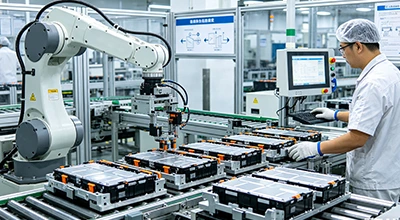
New Energy Solid-State Batteries

New Energy Solid-State Batteries

Densifies solid electrolytes and electrode materials to significantly enhance battery performance, safety, and overall energy density.
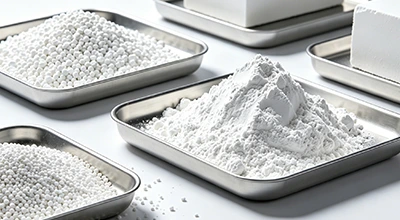
Advanced Ceramics

Advanced Ceramic Materials

Improves powder consolidation, reduce internal defects, and produce dense, high-performance ceramic components.
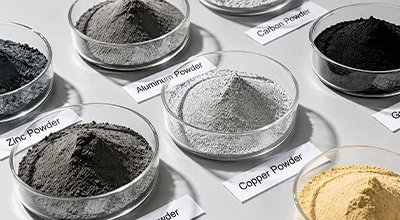
Powder Metallurgy

Powder Metallurgy

Enables uniform compaction and densification of metal powders, improving component strength and consistency.

Frequently Asked Questions

WIP equipment combines 80–200°C temperature and 200–600 MPa isotropic ultra-high pressure to achieve uniform densification of the cathode / solid electrolyte / anode layers, eliminate interface gaps, reduce interfacial resistance, improve ionic conductivity, and suppress lithium dendrite growth. It is the key equipment for solving the “interface contact challenge” in solid-state batteries.

Traditional rolling applies only unidirectional pressure, causing layer slippage and uneven density. WIP uses a fluid medium (oil/gas) to apply 360° uniform pressure, enabling conformal contact between layers, achieving over 95% density and reducing porosity below 0.15%, significantly lowering interface resistance and improving cycle stability.

  • Pressure: 200–500 MPa (200–300 MPa for sulfide systems, 300–500 MPa for oxide systems)
  • Temperature: 80–150°C (typically 100–120°C for electrolyte stability and interface bonding)
  • Holding time: 15–60 minutes (adjusted based on cell thickness and material system)
  • Heating rate: 2–5°C/min (to prevent thermal stress damage)
  • Sulfide Systems: Low temperature & low pressure (50–80°C, 200–300 MPa) to avoid decomposition and side reactions
  • Oxide Systems: Medium temperature & pressure (100–150°C, 300–400 MPa) to promote particle interface diffusion and bonding
  • Polymer Systems: High temperature & medium pressure (120–180°C, 200–300 MPa) to enhance densification through polymer thermoplasticity

The equipment supports precise parameter adjustment to meet multi-material production requirements.

  • Over 80% reduction in interface resistance (from 10³ Ω·cm² to 10¹ Ω·cm² level)
  • 2–5× increase in ionic conductivity (significantly reduced grain boundary resistance)
  • 3–10× longer cycle life (effectively suppressing lithium dendrite growth)
  • 10–15% higher energy density (improved volumetric energy density through material densification)