In the commercialization of solid-state batteries, microstructural uniformity, interface densification, and internal defect control are critical process challenges that determine energy density, cycle life, and intrinsic safety.
Through isotropic ultra-high pressure combined with precise temperature control, warm isostatic pressing enables full-scale material densification and atomic-level interface bonding, directly improving battery energy density, cycle performance, and intrinsic safety — providing essential process support for stable GWh-scale mass production.
Densification · Uniformity · Performance Breakthroughs
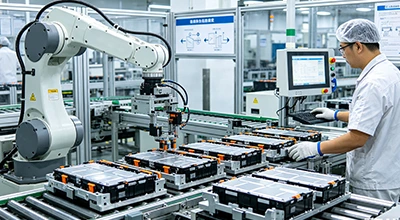
Densifies solid electrolytes and electrode materials to significantly enhance battery performance, safety, and overall energy density.
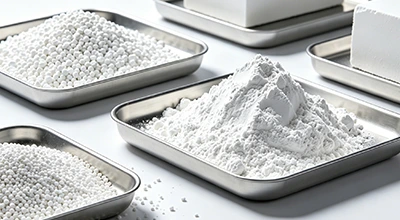
Improves powder consolidation, reduce internal defects, and produce dense, high-performance ceramic components.
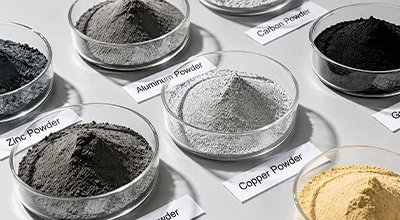
Enables uniform compaction and densification of metal powders, improving component strength and consistency.

Nano-scale precise homogenization of biopharmaceuticals ensures controlled particle size while preserving bioactivity.
Enable precise temperature-pressure-time process control, providing a reliable platform for solid-state battery R&D and mass production.
With irreplaceable advantages, warm isostatic pressing is becoming a standard process for advanced manufacturing in new energy, semiconductors, and aerospace.

Significantly enhance the core performance of solid-state batteries and advanced ceramics, overcome limitations, and unlock high-value application markets.
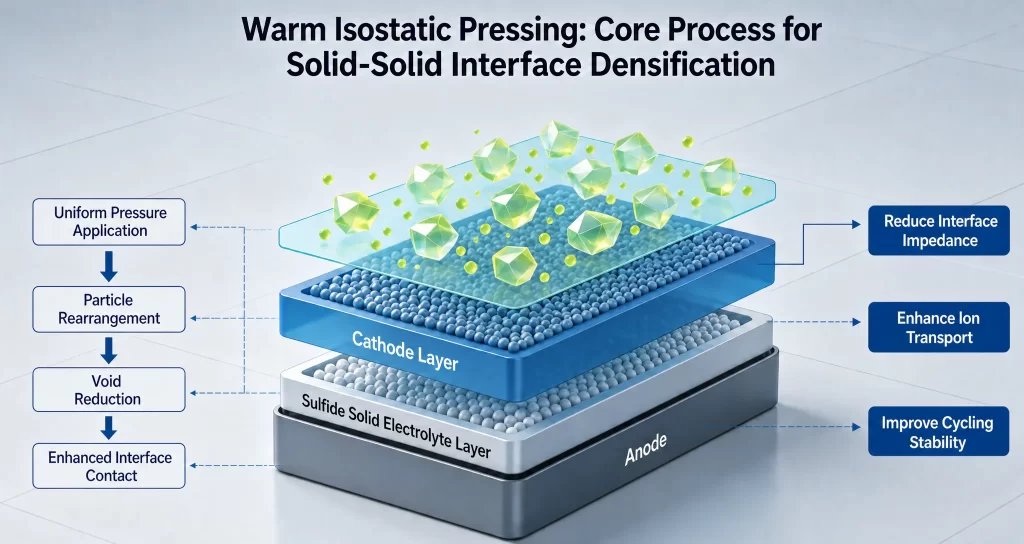
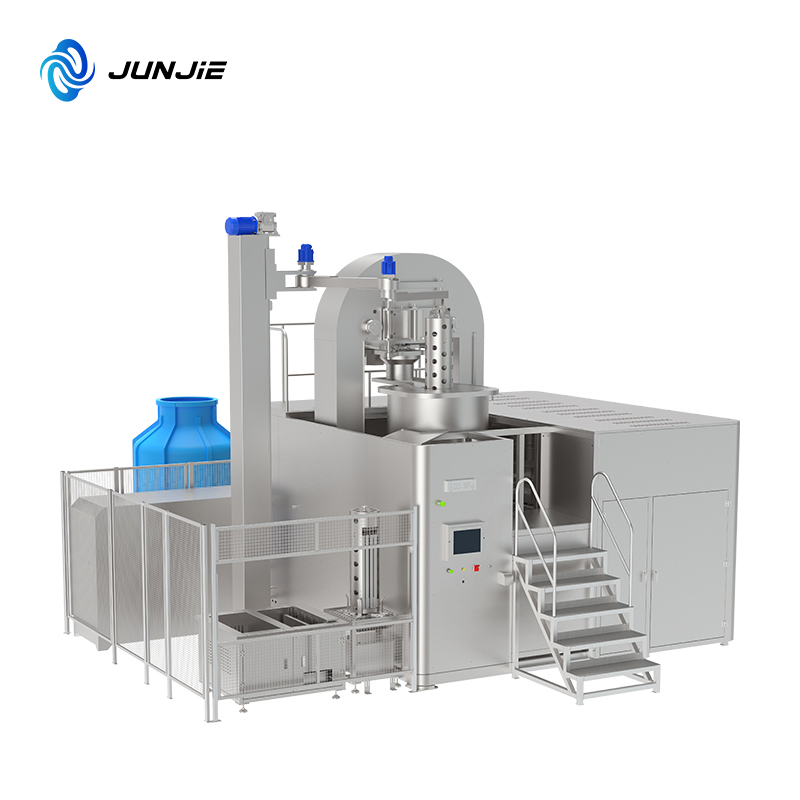
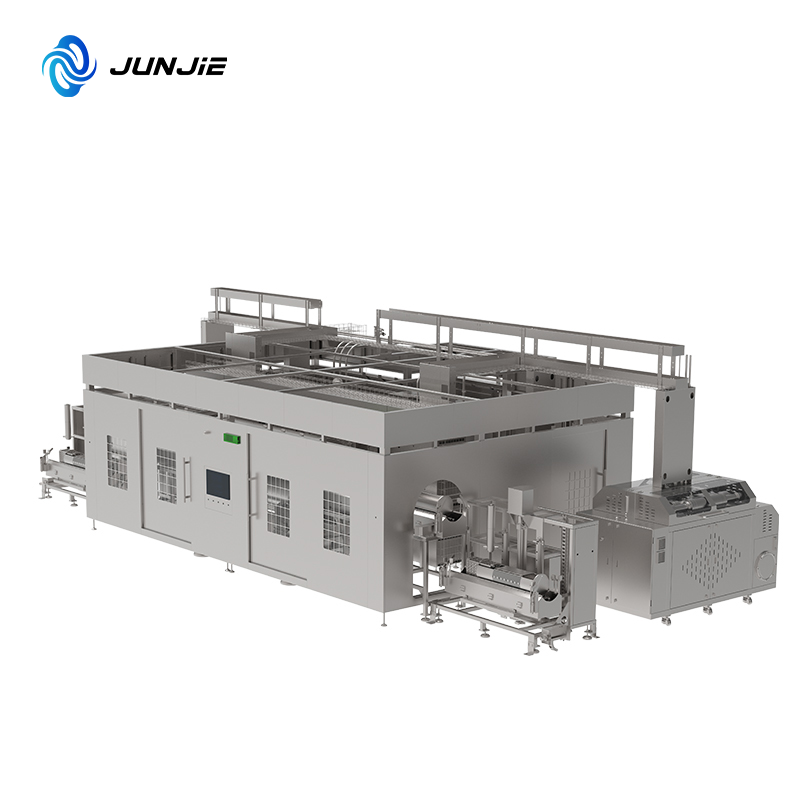
Traditional roller pressing applies pressure in one direction, causing uneven stress distribution. Microscopic gaps remain at the cell edges and solid-solid interfaces, preventing full densification. HiLock Warm Isostatic Pressing (WIP) uses oil as the pressure medium, applying isotropic ultra-high pressure at 80–150°C and 300–600MPa. Uniform pressure eliminates pores and delamination, strengthens cell structures, and ensures consistent conductivity and cycling performance across batches.
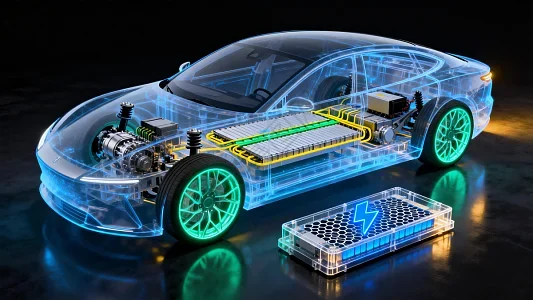
2026 is a critical milestone for solid-state battery commercialization. WIP technology uses isotropic ultra-high pressure to eliminate internal voids and improve interface contact, helping extend driving range from 500 km to over 1,000 km. It is becoming a key technology for battery manufacturers worldwide to move from laboratory development to mass production.
WIP equipment combines 80–200°C temperature and 200–600 MPa isotropic ultra-high pressure to achieve uniform densification of the cathode / solid electrolyte / anode layers, eliminate interface gaps, reduce interfacial resistance, improve ionic conductivity, and suppress lithium dendrite growth. It is the key equipment for solving the “interface contact challenge” in solid-state batteries.
Traditional rolling applies only unidirectional pressure, causing layer slippage and uneven density. WIP uses a fluid medium (oil/gas) to apply 360° uniform pressure, enabling conformal contact between layers, achieving over 95% density and reducing porosity below 0.15%, significantly lowering interface resistance and improving cycle stability.
The equipment supports precise parameter adjustment to meet multi-material production requirements.
From process adaptation and parameter optimization to production line design, we provide one-stop customization services.