
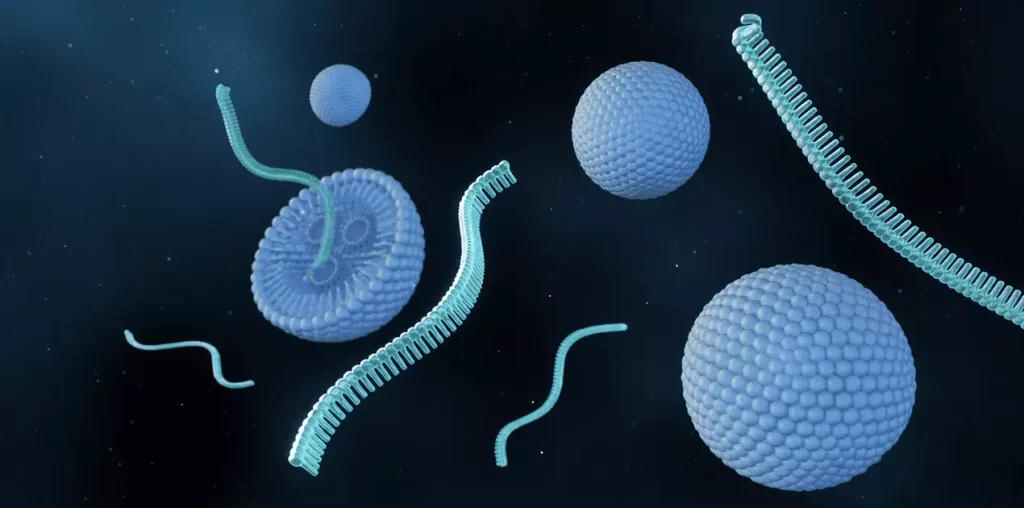
Lipid nanoparticles (LNPs) have become an important delivery platform for mRNA, siRNA, gene-editing components, and other advanced therapeutic modalities. As LNP-based drug delivery technologies move from laboratory research toward clinical development and commercial manufacturing, precise control of particle size and particle size distribution (PDI) has become a critical aspect of formulation development.
A narrow particle size distribution is important because LNP size and uniformity can influence drug encapsulation, colloidal stability, biodistribution, cellular uptake, and overall formulation performance. However, producing highly uniform LNP liposomes can be challenging when conventional batch mixing methods are used.
Microfluidic technology provides a highly controllable approach to nanoparticle formation by precisely controlling the mixing of the lipid and aqueous phases at the microscale. Unlike conventional methods that rely primarily on mechanical mixing, microfluidic systems can generate predictable flow patterns and rapid mixing conditions, helping promote more consistent nanoparticle nucleation and growth.
For researchers and pharmaceutical companies evaluating a microfluidizer or other high-pressure microfluidic processing equipment, understanding the relationship between flow conditions, mixing kinetics, lipid self-assembly, and particle size distribution is essential for optimizing LNP manufacturing processes.
Why Is a Narrow Particle Size Distribution Important?
Particle size is more than just a physical characteristic of an LNP formulation. It can influence several important performance attributes.
More Consistent Drug Delivery Performance
An LNP population with a relatively uniform particle size can exhibit more predictable behavior during formulation development and biological studies.
A broad particle size distribution may indicate the presence of multiple particle populations. These particles may behave differently in terms of stability, cellular interactions, and biodistribution.
Improved Formulation Stability
Particle size distribution is closely associated with colloidal stability. Compared with more uniform nanoparticle systems, highly heterogeneous particles may exhibit different aggregation and particle-to-particle interaction behaviors.
Therefore, controlling particle size and PDI can help improve formulation consistency and stability.
More Reproducible Biological Performance
For nucleic acid delivery systems, particle size and surface characteristics may affect cellular uptake and intracellular transport.
Consistently producing particles within a defined target size range through a stable and reproducible process can improve the reliability of subsequent biological studies and process development.
Better Process Control
For pharmaceutical development, the goal is not simply to successfully produce nanoparticles once. The objective is to consistently manufacture batches with reproducible and well-controlled properties.
For this reason, particle size distribution is an important critical quality attribute (CQA) in LNP development and manufacturing.
Microfluidic Technology: A Powerful Tool for Narrow LNP Particle Size Distribution
High-Pressure Processing with Fixed-Geometry Interaction Chambers
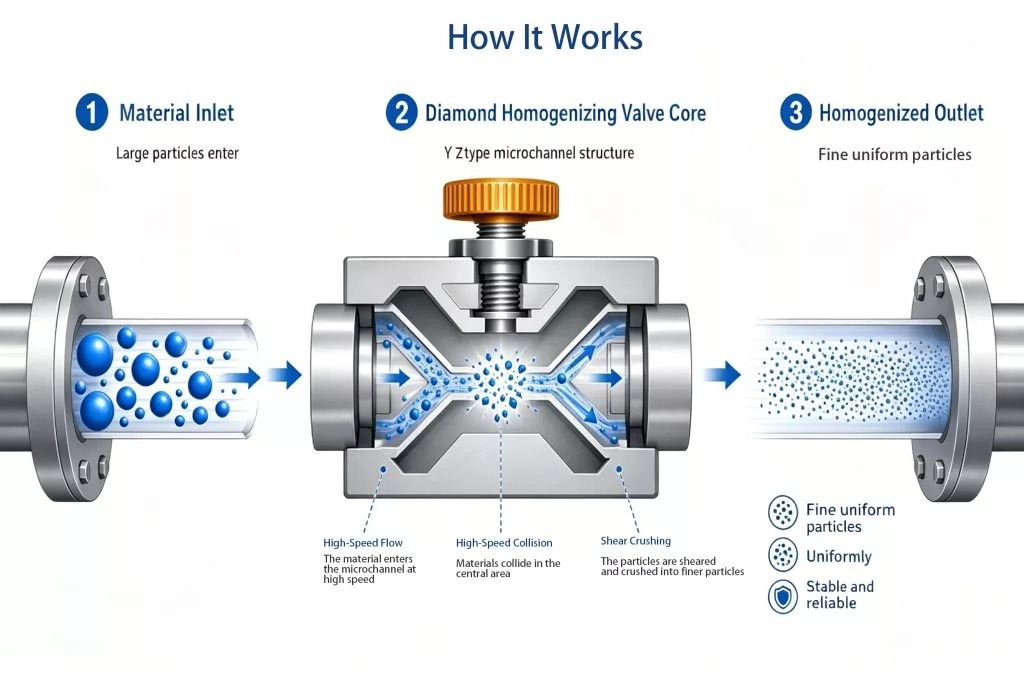
A key advantage of a high-pressure microfluidizer is its fixed-geometry diamond interaction chamber. Under pressures of up to 420 MPa, the material is forced through precisely engineered Y-type or Z-type microchannels, where multiple high-velocity streams interact at a precisely designed collision point.
Unlike conventional extrusion or ultrasonic methods, microfluidic processing uses fixed-geometry channels to maintain a highly consistent flow path, shear environment, and interaction geometry during each processing cycle. This can provide a high level of process consistency and particle size control.
Synergistic Effects of Cavitation and Shear Forces
During microfluidic processing, high-pressure fluid passes through microchannels at high velocity, generating intense hydrodynamic effects, including cavitation and shear forces.
- Cavitation: Rapid formation and collapse of microscopic bubbles can generate localized energy that helps disrupt lipid aggregates.
- Shear forces: High-velocity fluid streams and their interaction generate strong shear forces that can help reduce and homogenize particle structures at the nanoscale.
Together, these mechanisms can support precise control of LNP particle size. Depending on the formulation and process conditions, LNP particle sizes can potentially be controlled within the 10–100 nm range, with low PDI achievable after process optimization.
Diamond Interaction Chamber: Wear Resistance and Reduced Metal Contamination Risk
The diamond interaction chamber used in the HPW series offers several potential advantages for high-pressure nanoparticle processing:
- Extended service life: Diamond has extremely high wear resistance and can provide long-term stability under demanding processing conditions.
- Reduced metal contamination risk: The diamond interaction surface minimizes the risk of metallic wear particles entering the product stream.
- Stable channel geometry: Maintaining consistent channel dimensions over extended operation helps support reproducible processing performance and batch-to-batch consistency.
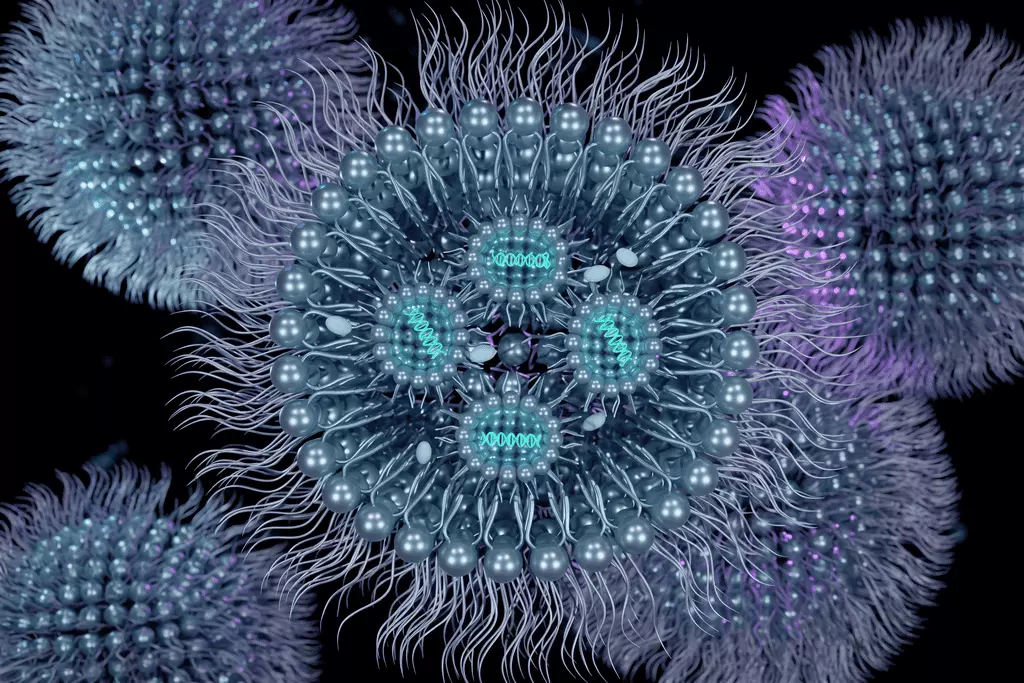
How Does Microfluidic Technology Reduce PDI?
Particle size distribution is commonly described using the Polydispersity Index (PDI).
A lower PDI generally indicates a more uniform nanoparticle population, while a higher PDI indicates greater variation in particle size.
Microfluidic technology can help reduce PDI through several interconnected mechanisms:
Rapid Mixing
Rapid mixing of the lipid and aqueous phases can minimize local differences in composition and concentration.
A More Uniform Mixing Environment
Microchannels can create a more controlled and consistent fluidic environment than conventional batch mixing.
More Controlled Nucleation
More consistent mixing conditions can promote more synchronized nanoparticle formation and lipid self-assembly.
Reduced Batch-to-Batch Variation
Precise control of process parameters can improve process repeatability and reduce variation between batches.
Optimized Fluid Dynamics
Channel geometry and processing conditions can be optimized to achieve the desired mixing and particle formation behavior.
However, it is important to emphasize that using microfluidic technology does not automatically guarantee a low PDI.
Final particle size and PDI depend on the complete formulation–process relationship, including lipid composition, flow conditions, concentration, temperature, mixing ratio, channel geometry, and processing strategy.
Microfluidic Technology vs. Conventional LNP Preparation Methods
| Comparison Factor | Film Hydration + Extrusion | Conventional High-Pressure Homogenization | Microfluidic Technology |
|---|---|---|---|
| Typical particle size | 50–200 nm | 50–300 nm | 10–100 nm |
| PDI | 0.2–0.4 | 0.15–0.3 | Potentially <0.1 after optimization |
| Batch consistency | Relatively low | Moderate | High |
| Scalability | Challenging | Scalable | Highly scalable with appropriate system design |
| Metal contamination risk | Low | Moderate | Very low with suitable diamond interaction chamber |
| Processing efficiency | Low | Moderate | High |
Actual particle size, PDI, scalability, and processing efficiency depend on formulation composition, equipment configuration, operating conditions, and process optimization.
Application Example: LNP Processing for mRNA Vaccines
Microfluidic processing can provide important advantages during the development of LNP formulations for mRNA vaccines.
Potential process improvements include:
- Particle size control: Reducing particle size from an initial population above 200 nm toward a target range below 100 nm.
- PDI optimization: Reducing PDI from approximately 0.3 toward a much narrower distribution, depending on formulation and process conditions.
- Encapsulation efficiency: Supporting high encapsulation efficiency when the formulation and process are properly optimized.
- Batch consistency: Improving reproducibility between batches through precise control of pressure, flow, temperature, and processing parameters.
These results should be considered formulation-specific rather than universal performance specifications. Actual LNP characteristics must be established through experimental process development and analytical characterization.
How to Select a Microfluidizer for LNP and Liposome Processing
When research institutions or pharmaceutical companies plan to use a microfluidizer for LNP liposomes or other nanoparticle applications, equipment selection should not focus on a single specification. Instead, several factors should be evaluated together.
Pressure Capability
The maximum operating pressure should match the requirements of the target formulation and application.
Interaction Chamber Design
The interaction chamber is one of the most important components in a high-pressure microfluidic system.
Its geometry can influence fluid behavior, shear forces, mixing efficiency, energy distribution, and final processing performance.
Process Stability
Stable pressure and flow are essential for achieving reproducible nanoparticle processing results.
Temperature Control
Because high-pressure processing can generate heat, effective temperature control is particularly important for temperature-sensitive LNP formulations and biological materials.
Material Compatibility
All product-contact components should be compatible with the formulation and meet the material requirements of the intended pharmaceutical or research application.
Cleaning and Maintenance
For pharmaceutical and research applications, convenient cleaning procedures and easy replacement of critical components can improve equipment utilization and reduce downtime.
Process Data Monitoring
Modern microfluidic processing equipment can integrate monitoring of pressure, temperature, flow rate, and other process parameters. These capabilities can support process optimization, reproducibility studies, and data traceability.
JUNJIE Microfluidizers: From LNP Research to Scale-Up and Production
Based on the independently developed core components of CTT Technology, the JUNJIE HPW series microfluidizer uses a standardized diamond interaction chamber design to create a complete equipment platform covering laboratory development, pilot-scale processing, and commercial production.
The system is designed to address key challenges in LNP formulation development and scale-up.
HPW-10 Laboratory Microfluidizer
The HPW-10 is designed for small-scale formulation development and process screening.
With a minimum processing volume as low as 20 mL, it is suitable for expensive nucleic acid materials and small-volume formulation experiments. An intelligent temperature-control system can monitor inlet and outlet temperatures while automatically recording and exporting key process parameters.
Applications include:
- LNP formulation screening
- Pressure-gradient process optimization
- Small-scale mRNA lipid nanoparticle preparation
- Laboratory-scale nanoparticle process development
HPW-250 Pilot-Scale Microfluidizer
The HPW-250 is designed to bridge laboratory development and industrial production.
It supports continuous feeding and can be equipped with an integrated CIP system for in-place cleaning. Its configuration allows researchers to scale up optimized laboratory processes and identify potential manufacturing risks before commercial production.
HPW-500 Industrial Microfluidizer
The HPW-500 provides stable operating pressure up to 420 MPa and supports continuous operation for industrial-scale processing.
It can also be configured with sanitary processing lines and SIP capabilities for applications requiring higher levels of process hygiene and production control.
| Production Stage | Recommended Model | Processing Capacity | Key Features |
|---|---|---|---|
| Laboratory R&D | HPW-10 | 8–10 L/h | Minimum 20 mL sample volume, servo direct drive |
| Pilot Scale | HPW-250 | 200–250 L/h | 37 kW hydraulic drive, CIP/SIP options |
| Industrial Production | HPW-500 | 500 L/h | 75 kW hydraulic drive, 24-hour continuous operation |
For universities, research institutes, pharmaceutical companies, and industrial customers working with high-value nanoscale materials, equipment performance depends heavily on the quality and stability of the core pressurization and interaction components.
JUNJIE high-pressure microfluidic systems feature independently developed and manufactured core components, including the intensifier and homogenization valve/diamond interaction chamber.
This vertically integrated manufacturing capability allows the pressure system, interaction chamber, and control system to be optimized as a complete fluid-processing platform rather than as isolated components.
JUNJIE solutions serve a wide range of industries, including universities and research institutes, advanced materials, new energy, biopharmaceuticals, food and beverage, and chemical processing.
Based on different materials and application requirements, processing parameters can be customized to achieve the desired dispersion, homogenization, emulsification, or nanoscale material-processing performance.
Conclusion
Achieving a narrow particle size distribution in LNP liposomes requires precise control of the nanoparticle formation process.
Microfluidic technology provides a controlled environment for lipid–aqueous phase interactions at the microscale. Rapid mixing, controlled flow ratios, reduced concentration gradients, optimized microchannel geometry, and process repeatability help achieve more consistent particle size and PDI.
A high-performance microfluidizer further enables controlled high-pressure processing through optimized interaction chambers and fluid dynamics, supporting stable and reproducible nanoparticle production.
However, increasing pressure alone cannot guarantee optimal results. LNP particle size and PDI depend on formulation composition, mixing conditions, flow parameters, temperature, channel geometry, processing pressure, and overall process strategy.
For researchers developing LNPs, liposomes, nanoemulsions, and other nanomaterials, the goal is to establish a controllable and reproducible process window for consistent nanoparticle formation.
As high-pressure microfluidic technology advances, it is becoming an increasingly valuable platform for scaling nanoscale material processing from laboratory research to standardized and controlled production.