
Table of Contents
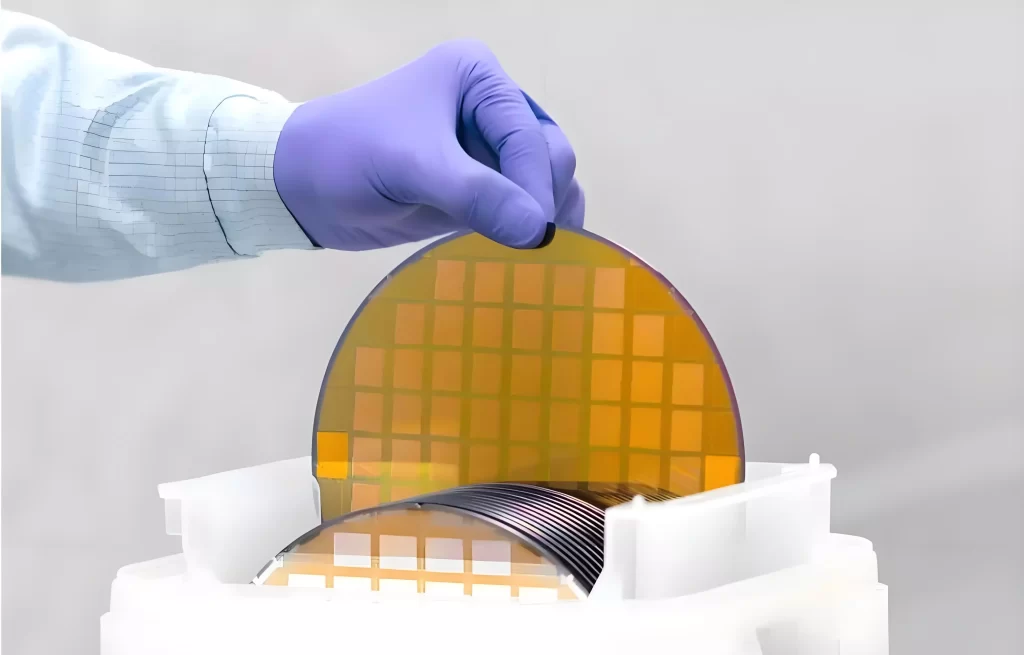
Advanced ceramics are becoming increasingly important in high-performance manufacturing, driven by growing demand from the semiconductor, automotive, and medical industries. Their excellent thermal stability, electrical insulation, wear resistance, and mechanical strength make them ideal for applications requiring precision and reliability.
According to Grand View Research, the global semiconductor ceramics market was valued at approximately $10 billion in 2025 and is projected to reach $16.7 billion by 2033, growing at a CAGR of 6.5%. These materials are widely used in semiconductor manufacturing equipment, wafer processing components, and electronic applications.
The automotive ceramics market is also expanding. Fortune Business Insights estimates that the global market reached $2.22 billion in 2025 and could grow to $4.25 billion by 2034, driven by demand for automotive electronics, sensors, electrical insulation, and other high-performance components.
Meanwhile, the global medical ceramics market was valued at $3.25 billion in 2025 and is projected to reach $6.37 billion by 2034, according to Fortune Business Insights. Dental restorations, orthopedic components, and medical devices continue to drive demand for ceramic materials with consistent properties and reliable manufacturing quality.
As these industries advance, manufacturers face increasingly stringent requirements for material uniformity, dimensional accuracy, and process consistency. One major production challenge is achieving stable slurry dispersion as particle sizes become finer, solid content increases, and impurity control becomes more critical. Reliable processing equipment is essential to maintaining material quality and supporting scalable production. A microfluidic homogenizer can help address these challenges by promoting efficient particle-size reduction and uniform dispersion, helping manufacturers optimize ceramic slurry processing and improve batch-to-batch consistency.
Global Advanced Ceramics Market Size and Forecast
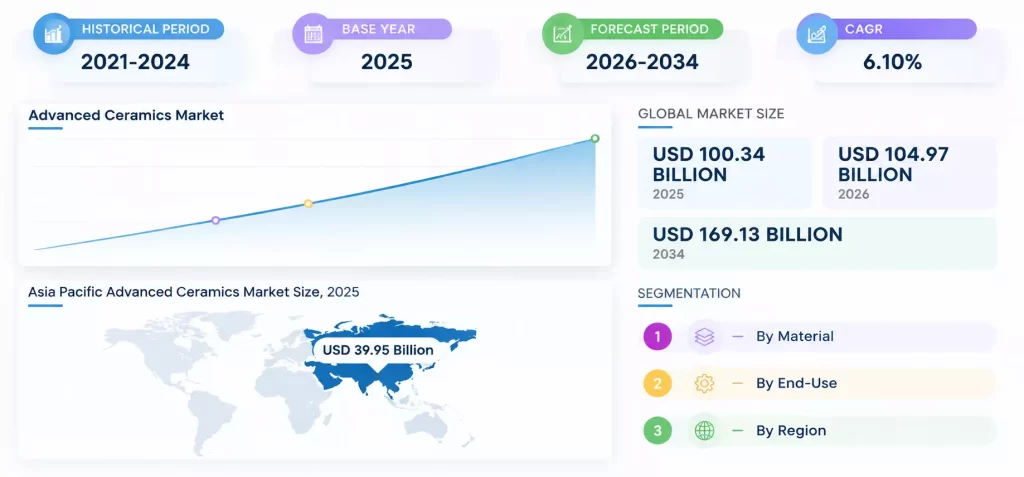
Source: Fortune Business Insights, Advanced Ceramics Market Size, Share & Industry Analysis.
Why Is Slurry Processing Becoming More Difficult?
Particle Size Requirements Are Getting Finer
The dielectric layers of MLCCs surpassed the 0.5 μm mass-production threshold in 2025, while the particle-size requirements for ceramic powders have continued to move from the micron scale toward the hundreds-of-nanometers range.
Solid Content Is Increasing, While Impurity Requirements Are Becoming Stricter
Shipments of slurries with more than 50% solid content are growing at a rate of 19.5%. As slurry viscosity increases, dispersion energy becomes more difficult to transfer effectively. Problems can then emerge throughout tape casting, coating, and sintering.
As new production capacity in 2026 is increasingly directed toward wet grinding and high-purity synthesis, wet-process materials inevitably involve slurry processing. Dispersion therefore directly affects material purity and batch-to-batch consistency.
Dispersion Is Becoming a Bottleneck in Mass Production
Unlike conventional ultra-high-pressure homogenizers, which rely on reciprocating valve-based compression, microfluidic homogenizer achieve dispersion through high-speed impingement within diamond microchannels. With no grinding media involved, the risk of contamination can be more effectively controlled.
The Root Causes of Agglomeration: Surface Energy, Particle Spacing, and Hard Agglomerates
Agglomeration in ceramic slurries is not simply the result of improper operation. It is driven by a combination of thermodynamic and kinetic effects.
Surface Energy Drives Agglomeration, While Electrostatic Barriers Become Weaker
When particles are refined to the hundreds-of-nanometers scale, their specific surface area increases significantly, resulting in higher surface energy. The particles therefore tend to spontaneously aggregate to reduce their surface energy.
Oxide particles typically have hydroxyl-rich surfaces. When the pH approaches the isoelectric point, electrostatic repulsion becomes weakest, allowing van der Waals attraction to dominate. Once particles come into close contact, they become increasingly difficult to separate.
Particle Spacing Determines Collision Probability
At the nanoscale, Brownian motion causes frequent particle collisions. As solid content increases, the distance between particles decreases, increasing the probability of agglomeration.
At the same time, higher viscosity makes it more difficult for shear energy to penetrate the interior of agglomerates. Instead of being broken apart, larger agglomerates may simply be bypassed by the surrounding flow.
Calcined Powders May Form Sintering Necks
Powders subjected to high-temperature calcination may also develop sintering necks, resulting in hard agglomerates that are difficult to reverse. Breaking these structures requires sufficiently high energy density.
How We Help Customers Validate Dispersion Processes
As a microfluidic homogenizer manufacturer, we never evaluate the dispersion performance of a microfluidic homogenizer based on a single number. Different material systems require different evaluation criteria and validation priorities.
Oxide Powder Slurries: Look Beyond the Tail of the Distribution
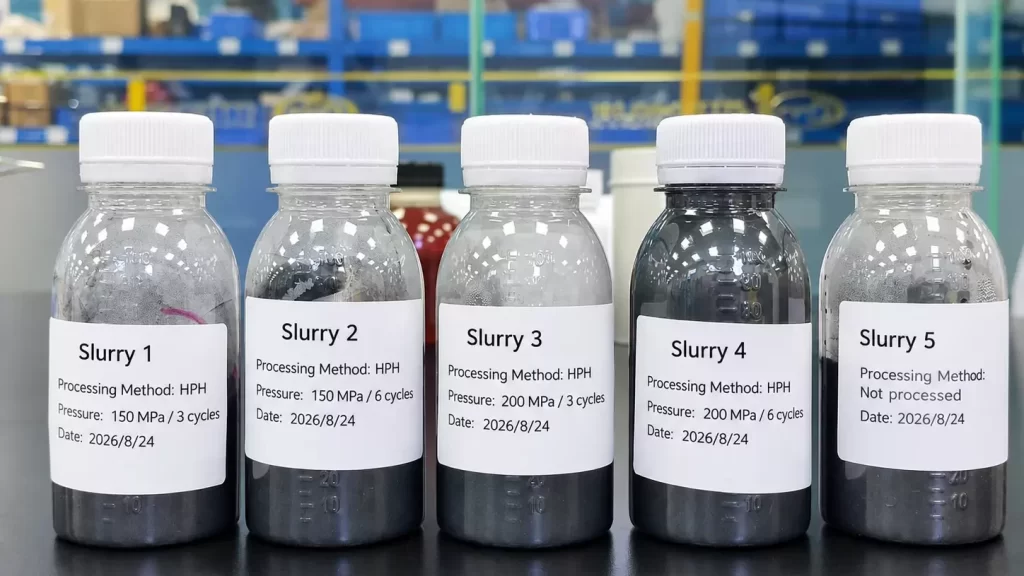
At 180–230 MPa with five passes, D50 can already decrease to 244–300 nm, while D90 may remain as high as 11 μm. Only after 10 passes does D90 decrease to approximately 1.67–2.02 μm.
In repeated measurements of the same batch, D90 can differ by nearly sixfold. After processing, the results converge to approximately 1,671–2,015 nm.
This is why both the distribution tail and repeatability must be evaluated together to avoid misjudging the dispersion effect.
Tempered Glass Powder Slurries: Evaluate Distribution Across Multiple Size Scales
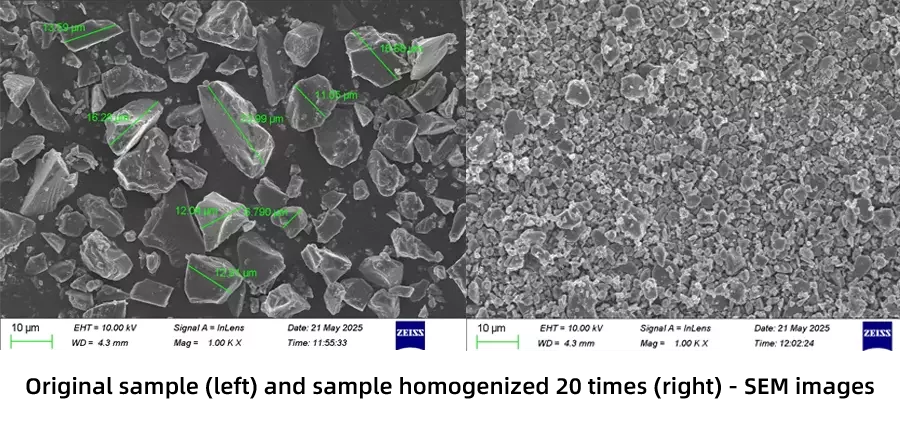
The original particle size is approximately 3 μm. After homogenization, the average particle size decreases to approximately 260 nm, while PDI remains stable at 0.07–0.10.
In this case, the narrowing of the particle-size distribution is more meaningful than the particle-size value alone, because it provides stronger evidence that agglomerates have been effectively broken apart.
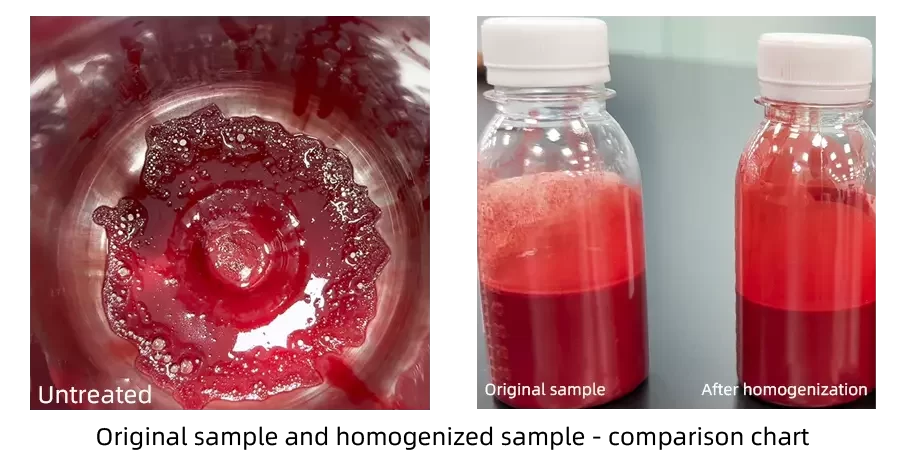
Oil-Based Pigment Dispersions: Determine the Optimal Number of Passes
At 270 MPa, D90 reaches 294 nm after five passes, while the PDI reaches an optimal value of 0.156 after 10 passes.
More passes do not necessarily produce better results. Step-by-step sampling and analysis are therefore essential for identifying the optimal processing window.
Why Choose the JUNJIE Microfluidic Homogenizer?
JUNJIE specializes in microfluidic homogenizer, supporting nanoscale dispersion applications across new energy materials, fine chemicals, food, pharmaceuticals, and other industries. Our equipment portfolio covers applications from laboratory-scale R&D to industrial-scale production.
Equipment Capability
JUNJIE microfluidic homogenizer covers a full pressure range of 0–420 MPa, with the HPW-10, HPW-250, and HPW-500 platforms sharing the same interaction chamber design to facilitate process scale-up from laboratory testing to production.
The interaction chamber uses diamond, rather than the valve-based structure commonly found in conventional ultra-high-pressure homogenizers. With no grinding media involved, wear debris from grinding media is eliminated from the slurry, helping reduce contamination risks.
R&D Capability
With more than 40 proprietary patents, JUNJIE has independently developed its interaction chamber technology and built an internal database covering 1,000+ material processing applications.
Based on these accumulated process data, JUNJIE can provide professional recommendations for process optimization and parameter selection.
Free Process Testing
Whether you are working with graphene, cerium oxide, MLCC ceramic slurries, cosmetic emulsions, or other advanced materials, JUNJIE supports sample-based process testing.
We conduct multiple comparative tests based on pressure × number of passes and provide data reports covering particle-size distribution, PDI, and other relevant parameters.
Conclusion
Demand for advanced ceramic materials continues to grow, while the industry is moving toward finer particle sizes, higher solid content, and higher purity.
As a result, dispersion is no longer a supporting process—it is becoming a critical factor affecting yield, consistency, and production cost.
In response to these challenges, JUNJIE provides technical support throughout the process, from early-stage process validation to production-scale data transfer and scale-up, helping customers systematically develop and optimize their dispersion processes.
