
Table of Contents
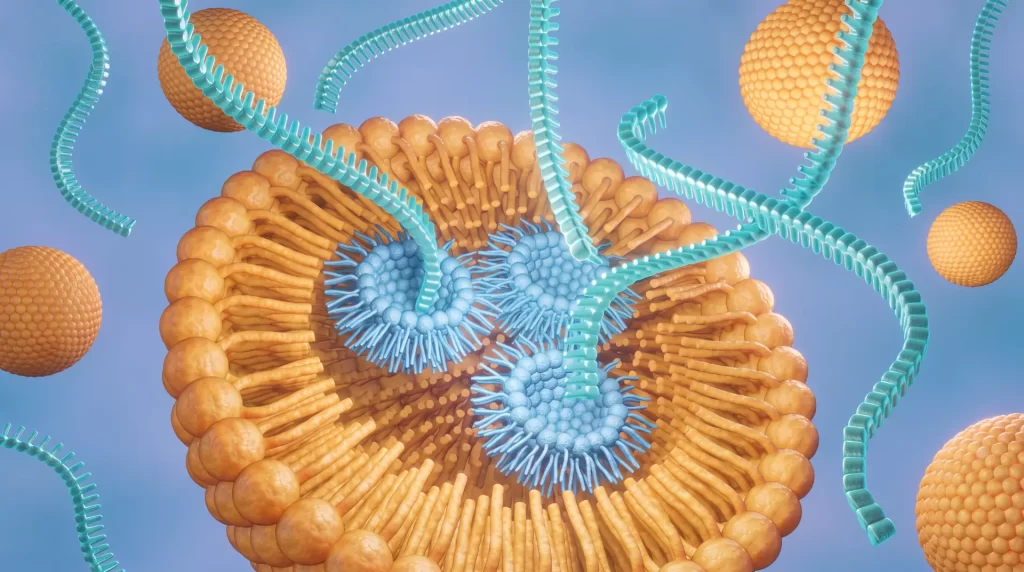
Lipid nanoparticles (LNPs) have become an important delivery platform for mRNA, siRNA, and other nucleic acid therapeutics. As LNP-based drug delivery continues to move from laboratory research toward clinical and commercial applications, manufacturers face increasing requirements for consistent particle size, narrow particle size distribution, high encapsulation efficiency, and long-term stability.
Among these parameters, LNP encapsulation efficiency is particularly important because it indicates how effectively the target nucleic acid is incorporated into the lipid nanoparticle structure. However, achieving high encapsulation efficiency is not simply a matter of increasing mixing intensity. The final performance of an LNP formulation is influenced by lipid composition, nucleic acid concentration, solvent conditions, flow rate, flow rate ratio, mixing characteristics, particle size, and other process parameters.
This is where microfluidic homogenizer offers significant advantages. By providing a highly controlled mixing environment, microfluidic processing allows researchers to investigate and optimize the conditions under which lipids and nucleic acids self-assemble into nanoparticles. When properly developed, the process can provide improved reproducibility while supporting the transition from laboratory-scale formulation development to larger-scale LNP manufacturing.
What Is LNP Encapsulation Efficiency?
LNP encapsulation efficiency refers to the proportion of the initial nucleic acid that becomes incorporated into or associated with the lipid nanoparticles during formulation. It is generally calculated by comparing the amount of encapsulated nucleic acid with the total amount of nucleic acid present in the formulation.
A high encapsulation efficiency means that a greater proportion of the available mRNA, siRNA, or other nucleic acid has been incorporated into the LNP system. This can be important for reducing free nucleic acid in the formulation and achieving a more consistent delivery system.
However, encapsulation efficiency should not be evaluated as an isolated quality attribute. A formulation may show high encapsulation efficiency while still exhibiting excessive particle size, broad PDI, poor colloidal stability, or undesirable changes during storage. For this reason, LNP formulation development generally considers encapsulation efficiency together with particle size, polydispersity index (PDI), morphology, stability, and functional performance.
The objective is therefore not simply to maximize one number, but to establish a reproducible formulation and processing window in which multiple critical quality attributes remain within the desired range.
How Does Microfluidic Technology Affect LNP Encapsulation?
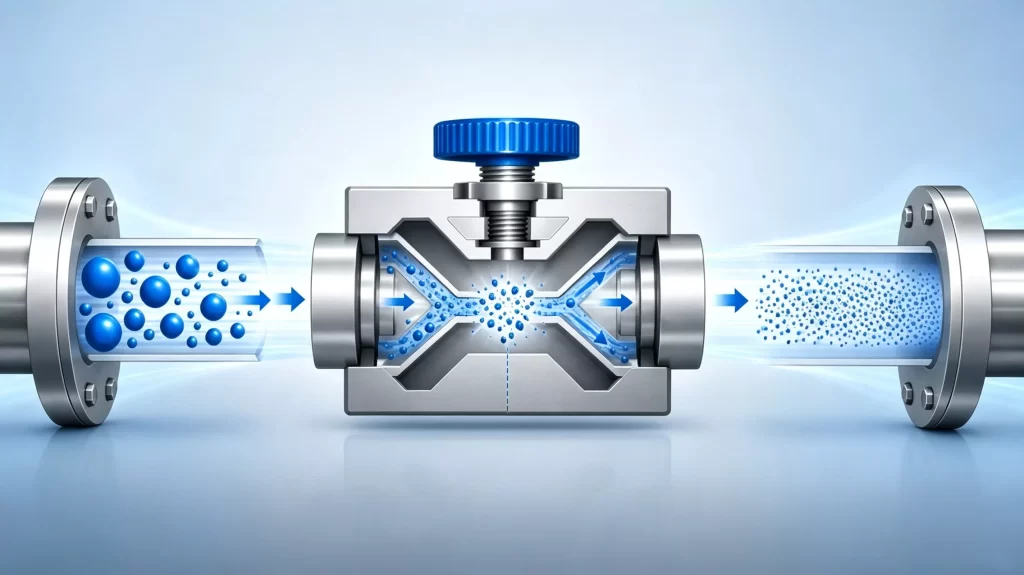
LNP formation typically involves rapidly mixing an organic phase containing lipids with an aqueous phase containing nucleic acids. When the two phases come into contact, changes in solvent conditions trigger lipid self-assembly and nanoparticle formation. The rate and uniformity of this mixing process can strongly influence the resulting particle characteristics.
Conventional bulk mixing can create local variations in concentration and mixing conditions, particularly when processing volume changes. Microfluidic technology, in contrast, provides a controlled environment in which the two fluid streams interact under defined flow conditions. This allows researchers to investigate how mixing behavior affects nanoparticle formation and establish a more reproducible relationship between process parameters and LNP characteristics.
The value of microfluidic processing therefore comes from process control rather than simply applying greater mechanical force. By controlling how the lipid and aqueous phases interact, researchers can influence the kinetics of nanoparticle formation and optimize parameters such as particle size, PDI, and LNP encapsulation efficiency.
Key Process Parameters Affecting LNP Encapsulation Efficiency
Flow Rate Ratio and Total Flow Rate
The ratio between the aqueous and organic streams is one of the most important variables in microfluidic LNP formulation. Commonly referred to as the flow rate ratio (FRR), this parameter affects the local mixing environment, solvent dilution, lipid concentration, and kinetics of nanoparticle formation.
Changes in FRR can therefore lead to differences in particle size, PDI, and encapsulation efficiency. The optimal ratio depends on the lipid system, nucleic acid concentration, solvent composition, and desired particle characteristics. Rather than assuming that one ratio is suitable for every formulation, researchers should experimentally establish an appropriate operating range.
Total flow rate (TFR) is also important because it influences the fluid dynamics and mixing behavior within the processing channel. Increasing or decreasing the total flow rate can change mixing time and local concentration gradients, potentially affecting nanoparticle nucleation and growth. The goal is not necessarily to maximize flow rate, but to identify a stable operating window that provides consistent formulation performance.
Lipid Composition and Nucleic Acid Concentration
The chemical composition of the LNP formulation has a fundamental influence on encapsulation. Typical LNP systems contain an ionizable lipid together with helper phospholipids, cholesterol, and PEG-lipids. The properties and ratios of these components determine how the lipid structures interact with nucleic acids and how nanoparticles form during the mixing process.
The concentration of the nucleic acid and the lipid-to-nucleic acid ratio must also be considered. If the formulation does not provide an appropriate environment for nucleic acid association, encapsulation efficiency may decrease even when the mixing process itself is well controlled.
For this reason, microfluidic process optimization should be performed together with formulation optimization. A well-designed mixing process cannot compensate for an unsuitable lipid composition or an inappropriate concentration ratio.
pH and Solvent Conditions
The physicochemical conditions during LNP formation also play an important role. pH, solvent composition, buffer conditions, ionic strength, and temperature can influence lipid ionization, nucleic acid interaction, solvent exchange, and nanoparticle self-assembly.
For example, changes in the chemical environment can alter the interaction between ionizable lipids and negatively charged nucleic acids. This means that improving LNP encapsulation efficiency requires control of both the physical mixing environment and the chemical conditions under which nanoparticle formation occurs.
A systematic formulation-development strategy should therefore evaluate processing parameters together with pH, solvent conditions, lipid concentration, and nucleic acid concentration rather than optimizing each factor independently.
Particle Size and PDI
Particle size and PDI are closely connected to the LNP formation process and should be evaluated alongside encapsulation efficiency. A formulation with high encapsulation efficiency but a broad particle size distribution may still have limitations in terms of physical stability and reproducibility.
Microfluidic processing can provide better control over the conditions that influence nanoparticle formation. By systematically adjusting flow conditions and formulation parameters, researchers can investigate the relationship between particle size, PDI, and encapsulation efficiency.
This is particularly valuable during formulation development because the target is usually a balanced combination of high encapsulation, appropriate particle size, narrow distribution, and stable performance rather than optimization of a single parameter.
The Role of a Microfluidic Homogenizer in LNP Formulation
A microfluidic homogenizer provides a controlled processing environment for fluid mixing and nanoparticle formation. Compared with conventional batch mixing, microfluidic systems can offer more consistent flow conditions and greater control over the interaction between different fluid streams.
For LNP development, this type of process control can make it easier to investigate critical variables such as flow rate ratio, total flow rate, formulation concentration, and mixing conditions. Researchers can then establish correlations between these parameters and important quality attributes including particle size, PDI, and encapsulation efficiency.
The benefit becomes particularly relevant when a formulation needs to be reproduced across multiple batches. Consistent processing conditions can reduce process variability and provide a more reliable foundation for scale-up.
However, a microfluidic homogenizer should not be viewed as a standalone solution for maximizing encapsulation efficiency. The performance of the final formulation depends on the interaction between equipment, process conditions, lipid chemistry, nucleic acid characteristics, and downstream processing.
Scaling LNP Production from Laboratory to Manufacturing
One of the biggest challenges in LNP development is transferring a successful laboratory formulation to larger-scale production. A formulation that performs well at a small scale may behave differently when the production volume and throughput increase because fluid dynamics, residence time, heat transfer, and process conditions can change.
Successful scale-up therefore requires more than simply increasing production volume. Researchers need to establish which process parameters are critical and determine how those parameters can be maintained as throughput increases.
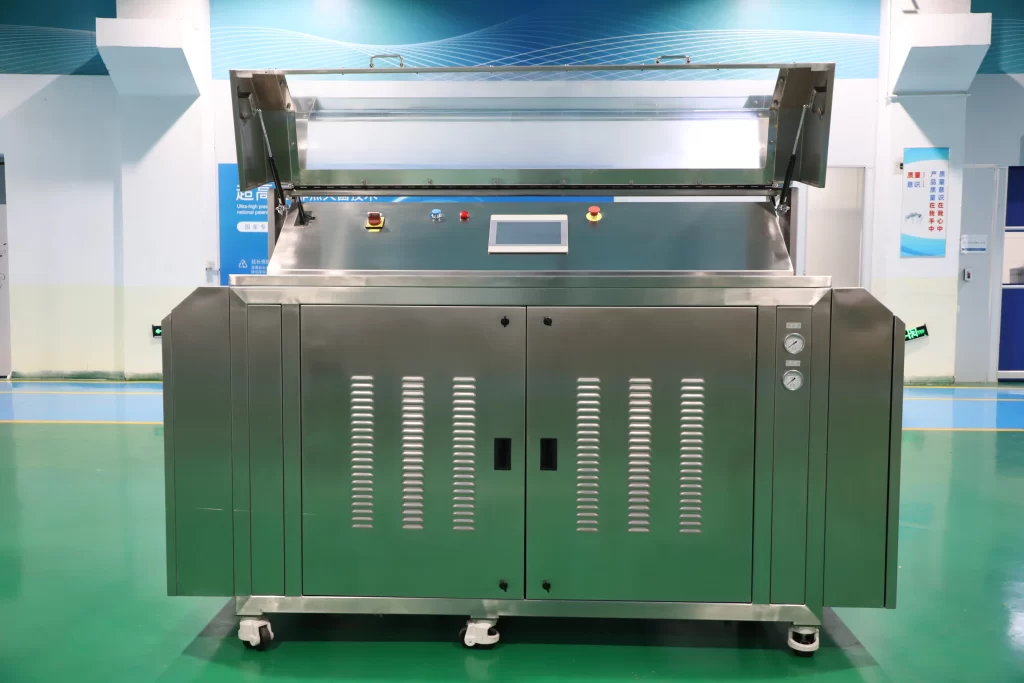
This is where production-scale microfluidic processing becomes important. An industrial microfluidizer can provide a platform for higher-throughput processing while maintaining controlled fluid-processing conditions. Depending on the system design, production-scale equipment can help manufacturers translate laboratory process knowledge into a repeatable manufacturing workflow.
The key principle is to establish a clear relationship between formulation composition, flow conditions, mixing behavior, and final LNP characteristics. Once this relationship is understood, scale-up becomes a process-engineering challenge rather than simply an increase in batch size.
How to Optimize LNP Encapsulation Efficiency Step by Step
A practical optimization strategy should begin by defining the target characteristics of the LNP formulation. These may include the desired encapsulation efficiency, particle size, PDI, stability, and functional performance.
Researchers can then establish an initial formulation based on lipid composition, nucleic acid concentration, and solvent conditions. Microfluidic processing parameters such as FRR and TFR can subsequently be varied systematically to determine their influence on the final formulation.
Analytical characterization should be performed after each experimental condition to compare encapsulation efficiency, particle size, PDI, and stability. Rather than focusing on the single condition that produces the highest encapsulation efficiency, researchers should identify a broader operating window in which multiple quality attributes remain consistent.
Once the optimal formulation and processing window have been identified, the process can be evaluated at pilot scale. This stage is important for determining whether the relationships observed during laboratory development remain valid at higher throughput. Further optimization may then be required before transferring the process to an industrial microfluidizer for larger-scale production.
This approach creates a continuous development path from laboratory research to manufacturing:
Formulation Development → Microfluidic Process Optimization → Pilot-Scale Verification → Industrial LNP Production
Microfluidic Homogenization for More Reproducible LNP Manufacturing
As LNP applications continue to expand in mRNA delivery and other nucleic acid-based technologies, reproducibility is becoming just as important as formulation performance.
A controlled microfluidic process can help researchers understand how changes in flow conditions and formulation parameters affect LNP characteristics. This provides a more structured approach to process development and can simplify the transition from experimental formulation to scalable production.
For laboratories, universities, pharmaceutical developers, and manufacturers, the appropriate processing system ultimately depends on the required scale, formulation characteristics, throughput, and process-development objectives. A laboratory microfluidic homogenizer may be appropriate for early formulation research, while larger-scale systems and an industrial microfluidizer may become relevant as production requirements increase.
Conclusion
Improving LNP encapsulation efficiency requires a comprehensive understanding of both formulation chemistry and processing conditions. Factors such as lipid composition, nucleic acid concentration, flow rate ratio, total flow rate, pH, solvent conditions, particle size, and PDI can all influence the final performance of an LNP formulation.
Microfluidic technology provides researchers with a controlled approach to investigate these relationships and develop more reproducible nanoparticle formation processes. By carefully optimizing the interaction between formulation parameters and fluid-processing conditions, researchers can work toward a balanced combination of encapsulation efficiency, particle size, PDI, stability, and functional performance.
As LNP development progresses from laboratory research toward commercial manufacturing, scalable processing becomes increasingly important. Microfluidic homogenizers can support formulation development, while an industrial microfluidizer can provide a pathway toward higher-throughput production.
The most effective LNP manufacturing strategy is therefore not simply to pursue the highest possible encapsulation efficiency, but to establish a controlled and scalable process that consistently delivers the required nanoparticle characteristics.
