
Table of Contents
In modern industrial manufacturing and scientific research, achieving finer particle sizes, more uniform dispersion, and long-term stability is often critical to product performance. From the conductivity of lithium-battery conductive slurries and the defect rate of CMP polishing slurries to the bioavailability of pharmaceuticals and the stability of beverages, the performance gap often comes down to one essential step: dispersion.
A high pressure microfluidic homogenizer is designed to address this challenge. By combining ultra-high-pressure fluid dynamics with precision microchannel technology, it provides an efficient approach to particle refinement, emulsification, exfoliation, and nano dispersion.
This article introduces JUNJIE’s high pressure microfluidic homogenizer from four perspectives: working principle, key advantages, application areas, and technical capabilities, demonstrating how advanced microfluidic technology can support material processing from laboratory research to industrial production.
What Is a High Pressure Microfluidic Homogenizer?
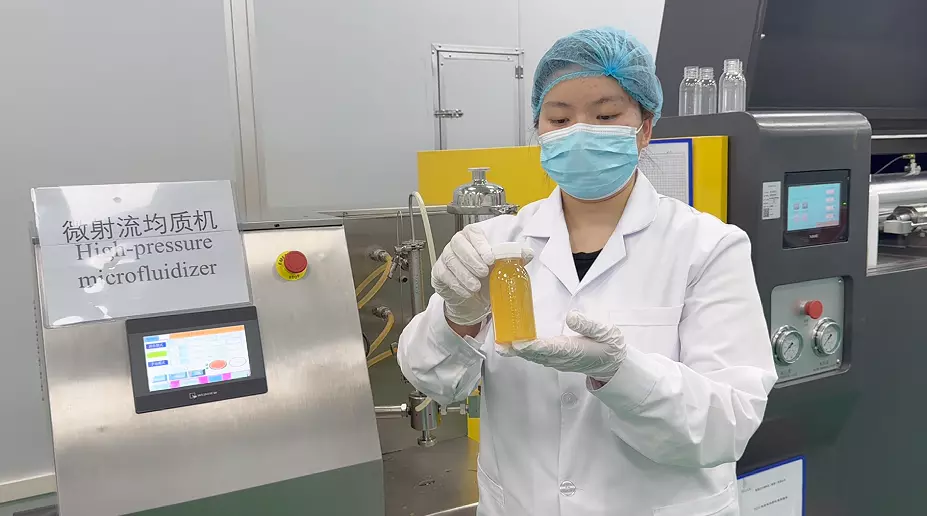
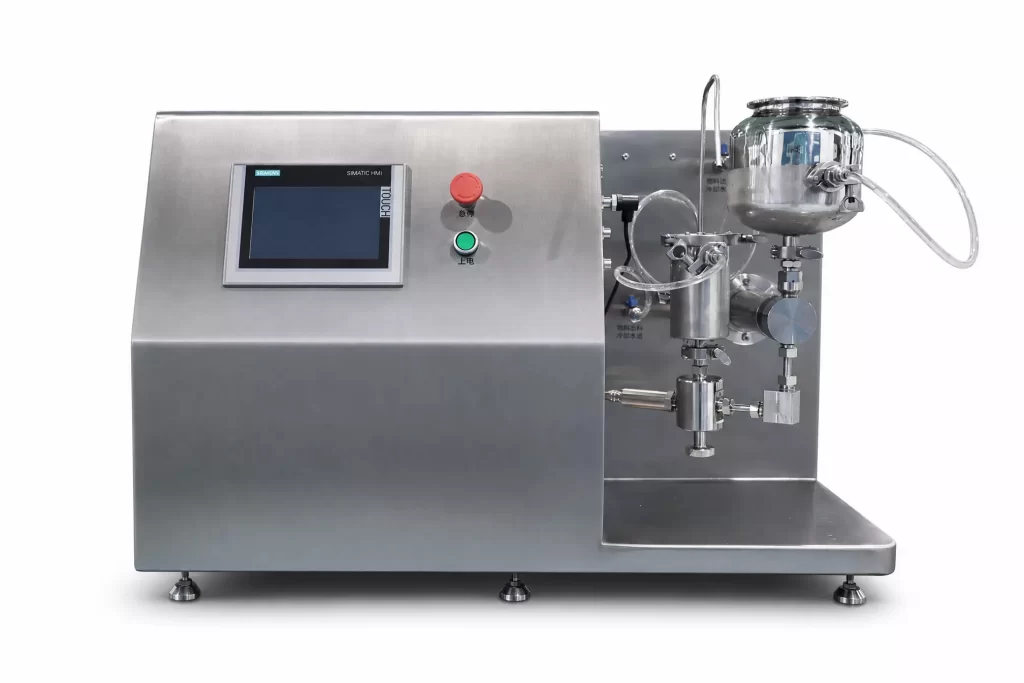
A high pressure microfluidic homogenizer is a processing device that uses high-pressure fluid flow through micron-scale channels to generate high-velocity jets for particle refinement, emulsification, and uniform dispersion.
Unlike conventional mechanical grinding, its core mechanism relies on precisely controlled fluid dynamics.
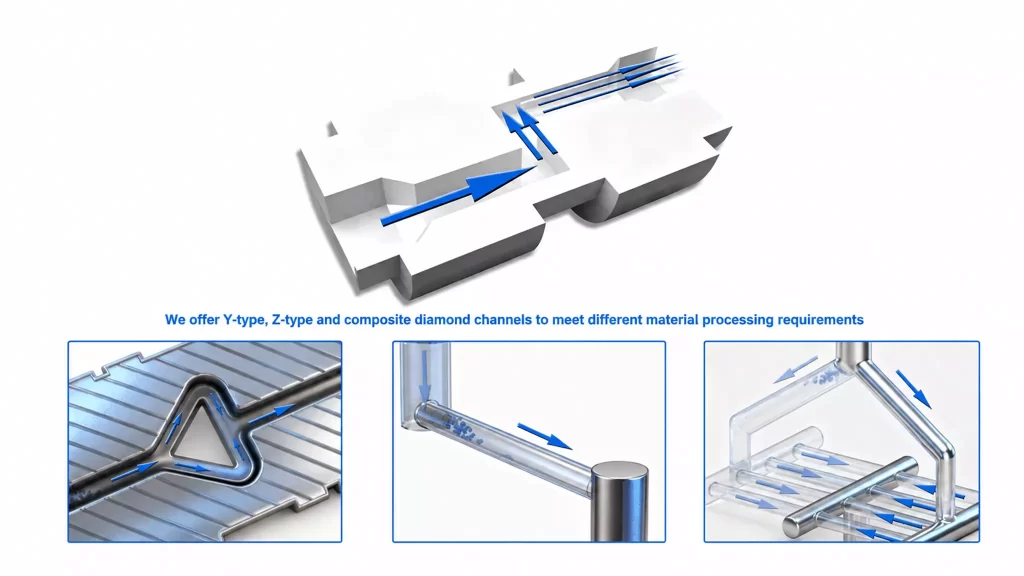
After being pressurized by a high-pressure pump, the material enters a micron-scale diamond interaction chamber. The flow is divided into two high-speed streams that collide directly within the chamber. At the same time, the material is subjected to intense shear forces, high-speed impingement, transient cavitation, and turbulent disturbances.
The controlled flow field can help break down agglomerated structures and improve dispersion efficiency. This makes microfluidic processing suitable for applications involving two-dimensional materials such as graphene and boron nitride, as well as high-hardness powders such as cerium oxide and silicon carbide.
Compared with conventional ball milling or bead milling, microfluidic processing does not require grinding media to achieve particle refinement. Traditional milling processes may require hours or even tens of hours, while high-pressure microfluidic processing can achieve the desired dispersion effect through optimized pressure, processing cycles, and flow-channel configurations.
Depending on the material system and process conditions, microfluidic technology can support nano-scale dispersion and narrow particle-size distributions, with some applications achieving PDI values below 0.2.
Four Key Advantages of High Pressure Microfluidic Homogenizers
1. High-Pressure Processing Capability
A high pressure microfluidic homogenizer uses controlled high-pressure fluid dynamics to process materials through refinement, dispersion, and homogenization.
It can be used for a wide range of material systems where particle-size distribution, dispersion stability, and uniformity are important.
For materials that are prone to agglomeration, sedimentation, or large-particle tails, optimized pressure and processing parameters can help improve the overall dispersion state.
2. Precise Process Parameter Control
Different materials require different combinations of pressure, processing cycles, temperature rise, channel geometry, and processing paths.
JUNJIE microfluidic systems can be evaluated according to factors such as:
- Solid content
- Material viscosity
- Initial particle size
- Target particle size
- Dispersion stability
- Processing temperature
- Required throughput
- Number of processing cycles
Through process screening and sample testing, suitable processing windows can be identified for different material systems.
This parameter-based approach allows customers to move beyond simply selecting equipment and instead develop a processing route based on their specific material characteristics.
3. Reduced Wear and Contamination Risk
The core interaction chamber of JUNJIE microfluidics devices can utilize diamond-based interaction chamber technology, providing high hardness and wear resistance.
Unlike conventional homogenization systems that rely on metal valve structures in the high-pressure processing zone, the diamond interaction chamber is designed to minimize wear-related contamination during processing.
This feature is particularly valuable for applications where material purity is critical, including:
- Semiconductor CMP polishing slurries
- Electronic-grade ceramic slurries
- High-purity graphene
- Advanced energy materials
- Functional nanomaterials
For these applications, controlling contamination sources is an important part of maintaining material quality and process consistency.
4. Suitable for Multiple Industries
JUNJIE microfluidic technology can be adapted to a broad range of material systems, including:
- Food and beverage
- Plant extracts
- Nanomaterials
- CMP polishing slurries
- Ceramic slurries
- Water-based coatings
- Emulsions
- Functional slurries
- Pharmaceutical formulations
- New energy materials
The same microfluidic processing principle can support laboratory research, pilot-scale process development, and industrial production, depending on equipment configuration and material requirements.
Applications of High Pressure Microfluidic Technology
Food and Beverage
In food processing, a high pressure microfluidic homogenizer can help refine and uniformly disperse components such as oils, sugars, proteins, and flavor ingredients.
It can be applied to products including:
- Dairy products
- Fruit juices
- Plant-based milk
- Sauces and dressings
- Chocolate
- Functional beverages
By improving particle dispersion and emulsion uniformity, microfluidic processing can help enhance product texture, appearance, and physical stability.
Pharmaceutical Applications
In pharmaceutical processing, microfluidic technology can be used for particle-size reduction, emulsification, and formulation development.
Active pharmaceutical ingredients and other functional components can be processed into more uniform dispersions or emulsions. Depending on the formulation and process design, this may support improvements in dissolution behavior and formulation performance.
Potential applications include pharmaceutical formulations, injectable formulations, vaccines, and oral drug delivery systems.
The appropriate processing method and parameters must be determined according to the specific formulation and regulatory requirements.
Cosmetics
Cosmetic formulations such as emulsions, creams, and functional formulations require fine particle distribution and good physical stability.
A high pressure microfluidic homogenizer can help improve the uniformity of dispersed phases and the consistency of formulations.
Applications may include:
- Creams
- Lotions
- Nanoemulsions
- Functional skincare formulations
- Cosmetic active-ingredient dispersions
Advanced Materials
Advanced materials are one of the important application areas for high pressure microfluidic processing.
For conductive slurries, nanomaterials, polymer solutions, ceramic suspensions, and other functional materials, microfluidic technology can provide controlled high-energy processing without introducing conventional grinding media.
This can help reduce contamination risks while improving dispersion uniformity and batch-to-batch consistency.
Typical applications include:
- Lithium-battery conductive slurries
- Graphene dispersions
- Boron nitride
- Cerium oxide CMP slurries
- Silicon carbide suspensions
- Ceramic slurries
- Functional nanomaterials
JUNJIE High Pressure Microfluidic Technology
JUNJIE focuses on the development of high pressure microfluidic homogenization and nano-dispersion technologies, with an emphasis on independent technology development and process engineering.
The system combines ultra-high-pressure processing with precision diamond interaction chamber design to provide controlled and repeatable material processing.
Independently Developed Core Technology
JUNJIE develops its core interaction chamber technology in-house and has accumulated more than 40 patents and proprietary technologies.
By maintaining control over key technologies, JUNJIE can develop processing solutions based on specific material characteristics rather than simply applying fixed standard parameters.
For challenging materials, customers can receive customized process recommendations based on pressure requirements, particle-size targets, viscosity, solid content, and other processing conditions.
Product Range for Research to Production
JUNJIE provides equipment covering different stages of material development and production.
The product range includes:
- HPW-10 – Laboratory-scale research and process development
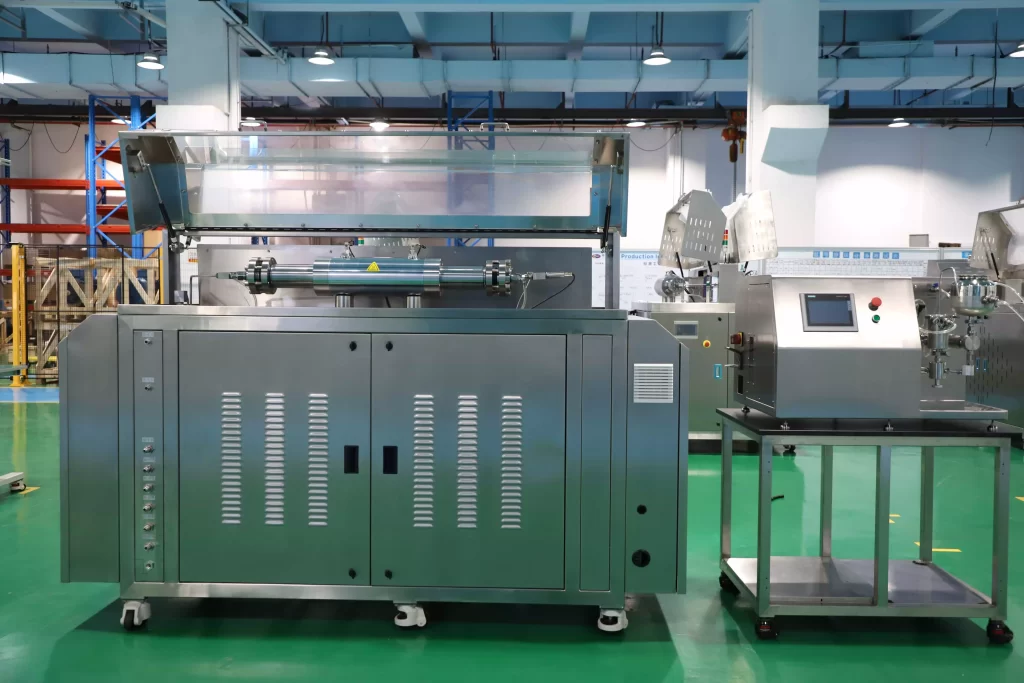
- HPW-250 – Pilot-scale testing and process validation
- HPW-500 – Larger-scale production applications
This product structure allows customers to develop processing parameters at the laboratory stage and subsequently scale the process toward pilot and industrial applications.
The objective is to maintain process continuity throughout scale-up while reducing repeated testing and process-development costs.
Customized Microfluidic Process Solutions
JUNJIE provides more than standardized microfluidics devices.
Based on the customer’s material properties and processing objectives, JUNJIE can provide customized equipment configurations and process-development support.
Whether the requirement is laboratory-scale sample testing or larger-scale production, the system can be configured according to factors such as:
- Material properties
- Target particle size
- Dispersion requirements
- Processing capacity
- Pressure requirements
- Number of processing cycles
- Temperature sensitivity
JUNJIE also supports sample testing, allowing customers to evaluate their materials before equipment selection and identify a suitable processing route.
Precision Manufacturing and Quality Control
JUNJIE benefits from the high-pressure manufacturing capabilities of its parent company, Zhuhai CTT Technology.
Key components, including high-pressure boosters and diamond interaction chambers, are manufactured and assembled within an integrated manufacturing system.
From individual components to complete equipment, standardized quality-control procedures are applied throughout manufacturing and assembly to support equipment stability, durability, and long-term operating reliability.
Why Choose JUNJIE Microfluidic Solutions?
When evaluating a high pressure microfluidic homogenizer, equipment performance is only one part of the decision.
Material characteristics, process parameters, interaction chamber design, scale-up capability, and application support can all affect the final processing results.
JUNJIE combines microfluidic technology, high-pressure equipment development, precision manufacturing, and application testing to provide solutions for customers working in:
- Semiconductor materials
- New energy
- Advanced materials
- Pharmaceuticals
- Food and beverage
- Cosmetics
- Chemical processing
From laboratory-scale research to pilot validation and industrial production, JUNJIE can provide equipment configurations and technical support based on the customer’s specific material and process requirements.
Conclusion
High pressure microfluidic technology is becoming an important processing approach for applications that require controlled particle refinement, nano dispersion, emulsification, and high dispersion uniformity.
For advanced materials, semiconductor slurries, new energy materials, pharmaceuticals, food, and cosmetics, the right microfluidic processing system can help address challenges related to agglomeration, particle-size distribution, contamination, and process consistency.
If you are evaluating a high pressure microfluidic homogenizer for your material or formulation, JUNJIE provides sample testing and process-development support.
