
Table of Contents
In university and scientific research laboratories, homogenizers are essential pieces of equipment for applications such as nanoparticle drug preparation, cell disruption, protein dispersion, and nanoemulsion production. However, with numerous homogenizer brands and models available on the market, researchers often face challenges when selecting the right equipment. What operating pressure is required? What is the minimum sample volume? Can experimental data be automatically recorded? Can the equipment provide a complete and traceable data record to support academic publications and patent applications?
In 2026, as biotechnology, nanomaterials, food science, and other disciplines become increasingly interconnected, university research laboratories are placing higher demands on homogenization equipment. Multifunctionality, intelligent operation, and small sample processing capabilities have become key considerations when selecting high-pressure lab homogenizers.
This article explores the essential factors in high-pressure lab homogenizer selection and introduces practical research applications to help scientists and laboratory managers make informed equipment purchasing decisions.
Types and Characteristics of High-Pressure Lab Homogenizers
There are four common types of high-pressure lab homogenizers currently available on the market. Each operates on a different principle and offers distinct performance characteristics and application advantages.
| Type | Principle | Working Pressure | Particle Size Effect | Pros | Cons | Suitable Scenarios |
|---|---|---|---|---|---|---|
| High Shear Homogenizer | High-speed rotor rotation generates shear force | Low (< 40MPa) | Micron level | High efficiency, suitable for pre-mixing | Troublesome to clean, not suitable for high-concentration materials | Emulsion preparation, initial crushing |
| Traditional High-Pressure Homogenizer | High pressure passes through an adjustable valve gap | High (Max 150-200MPa) | Sub-micron level (100-200nm) | Stable pressure, suitable for routine R&D | Easy wear on valve seat, risk of metal contamination | Routine nano-emulsions, cell disruption |
| Ultrasonic Homogenizer | Ultrasonic waves, cavitation effect | No direct pressure | Nanometer level | High precision, suitable for laboratories | High equipment cost, prone to heating | Small sample processing |
| Microfluidizer | Ultra-high pressure fixed microchannel collision | Extremely High (Up to 450MPa) | Nanometer level (10-100nm), extremely narrow PDI | Narrowest particle size distribution, best uniformity, low contamination risk | High initial investment cost | High-end nano-drugs, liposomes, cell disruption |
Compared with traditional industrial production, university research laboratories have several specific requirements for homogenization equipment:
- Small Sample Volumes: Research-stage materials are often limited or expensive, with sample volumes sometimes as low as a few dozen milliliters.
- Experimental Reproducibility: Fixed geometric channel designs help ensure consistent processing conditions and repeatable experimental results.
- Data Traceability: Complete experimental records are essential for academic publications, patent applications, and research project validation.
- Equipment Versatility: A single machine should ideally support different materials and experimental applications.
With its fixed geometric interaction chamber design and precise ultra-high-pressure control, microfluidizer technology is becoming an increasingly attractive solution for university and research laboratories.
Five Key Factors to Consider When Selecting a High-Pressure Lab Homogenizer
Minimum Sample Volume and Product Hold-Up
Research samples are often limited in quantity and valuable, particularly during liposome formulation screening and early-stage mRNA vaccine formulation development. In these applications, sample volumes may be as small as 20–50 mL.
The minimum processing volume of a homogenizer directly determines whether it can accommodate these experiments while minimizing material waste.
Traditional homogenizers may require a minimum sample volume of approximately 100 mL, whereas advanced microfluidizer systems, such as the JUNJIE HPW-10, can process sample volumes as low as 10 mL, with a residual volume of approximately 1 mL. This low-hold-up design significantly reduces sample loss and helps researchers make better use of valuable experimental materials.
When evaluating a high-pressure lab homogenizer, researchers should therefore consider not only its processing capacity but also its minimum operating volume and residual sample volume.
Operating Pressure and Homogenization Performance
Operating pressure directly influences particle size reduction, cell disruption efficiency, and dispersion quality. However, different materials and experimental objectives require different pressure conditions.
For laboratory applications, it is advisable to select equipment with an adjustable operating pressure range of approximately 150–310 MPa, depending on the specific research requirements.
The drive system is another important consideration. Compared with conventional hydraulic systems, servo-electric cylinder drives can provide more precise pressure control and smoother operation, making them particularly suitable for research applications that require accurate and repeatable experimental conditions.
When selecting research equipment, scientists should evaluate both the maximum operating pressure and the stability of pressure regulation to ensure that the system meets their specific experimental requirements.
Data Recording and Regulatory Compliance
Data management is one of the most frequently overlooked considerations when purchasing laboratory homogenization equipment, yet it can become a major issue during actual research operations.
Academic publications, patent applications, and research project evaluations all require reliable experimental data. Traditional equipment often relies on manual recording of parameters such as pressure, temperature, and processing time. This approach is time-consuming and increases the risk of incomplete or inconsistent experimental records.
Therefore, laboratories should prioritize equipment equipped with touchscreen control systems that support automatic parameter recording and data export.
For research institutions with future commercialization or pharmaceutical manufacturing plans, selecting equipment with GMP- and GLP-compatible documentation and system integration capabilities can also help facilitate subsequent process development and scale-up.
Temperature Control Capabilities
Biological macromolecules, including proteins, enzymes, and mRNA, as well as other heat-sensitive materials, may lose their activity when exposed to excessive temperatures during homogenization.
Without effective temperature management, processing performance and experimental results may be significantly affected.
For different heat-sensitive materials, JUNJIE microfluidic homogenizers support flexible temperature-control module configurations.
For general heat-sensitive materials, the target processing temperature can be maintained below 40°C. For highly temperature-sensitive formulations, low-temperature homogenization at approximately 4°C may be required.
When choosing a high-pressure lab homogenizer, researchers should evaluate whether its temperature-control system can accommodate their materials, processing intensity, and experimental protocols.
Flexible Pressure Adjustment and Application Versatility
University laboratories often need a single piece of equipment to support multiple research projects.
For example, researchers may use the same homogenizer for liposome preparation, cell disruption, and nanoemulsion dispersion across different experiments.
Equipment flexibility, particularly the ability to adjust operating pressure and processing conditions for different materials, directly affects laboratory efficiency and research productivity.
A versatile homogenization system should allow researchers to optimize processing parameters according to material characteristics and experimental objectives without requiring multiple specialized machines.
This flexibility is especially valuable for interdisciplinary research involving nanomaterials, biotechnology, pharmaceuticals, and advanced food processing.
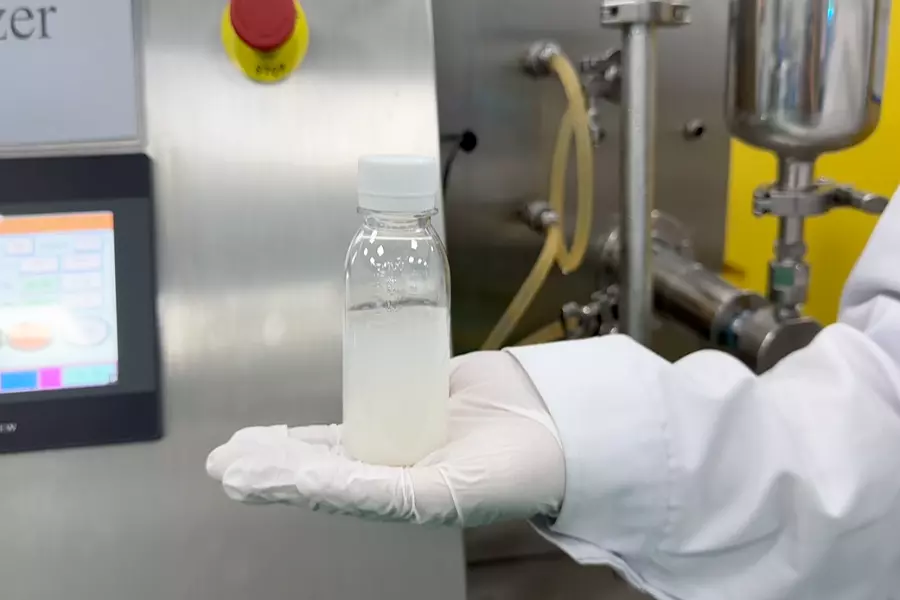
JUNJIE High-Pressure Lab Homogenizer
JUNJIE specializes in microfluidic nano-homogenization technology and the development of advanced homogenization equipment.
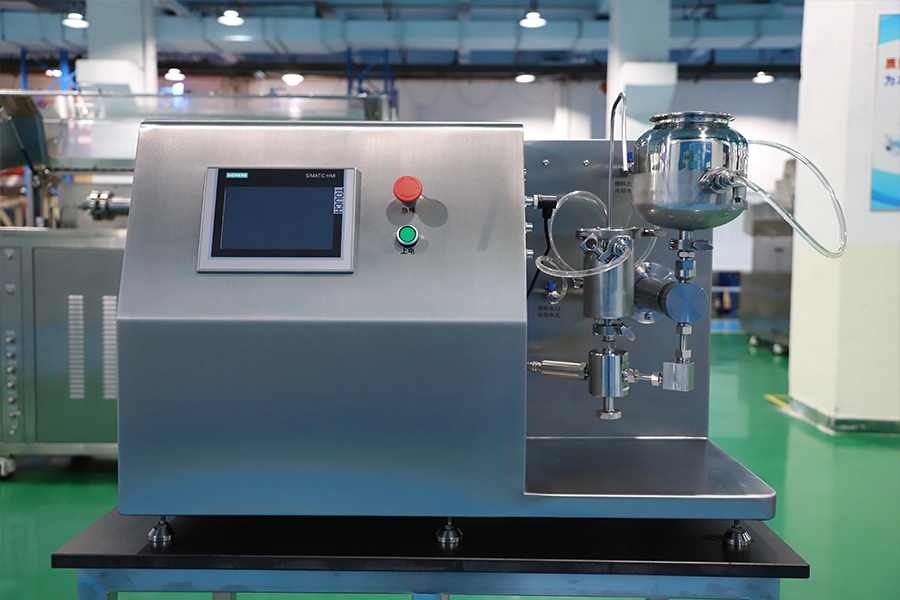
JUNJIE’s HPW-10L laboratory microfluidizer is designed to meet the demanding requirements of university laboratories, research institutions, and advanced materials developers. Combining multifunctionality, intelligent control, and small-volume processing capabilities, it provides a versatile solution for research applications across nanomaterials, new energy, biopharmaceuticals, and fine chemicals.
Key Technical Specifications of the HPW-10L
The HPW-10L laboratory microfluidizer features a maximum design pressure of 420 MPa, providing a wide operating range for applications in materials research and biopharmaceutical development.
Its processing capacity reaches 10 L/h, supporting continuous and stable operation for laboratory-scale experiments.
One of its most notable advantages is its low-volume processing capability. The minimum processing volume is just 20 mL, while the residual volume is approximately 1 mL. This significantly reduces sample waste, particularly when working with expensive or limited research materials.
| Technical Parameter | HPW-10L Specifications |
|---|---|
| Equipment Type | Laboratory Microfluidizer |
| Maximum Design Pressure | 420 MPa |
| Processing Capacity | 10 L/h |
| Minimum Processing Volume | 20 mL |
| Residual Volume | Approx. 1 mL |
| Main Applications | Nanomaterials, biopharmaceuticals, new energy, fine chemicals |
Beyond Equipment: Process Testing and Technical Support
Selecting the right high-pressure lab homogenizer is only the first step in developing a reliable research process.
Different materials may respond differently to homogenization pressure, processing cycles, temperature, and interaction chamber configurations. Therefore, process validation and parameter optimization are equally important.
JUNJIE provides preliminary process testing and technical consultation to help customers evaluate material characteristics, identify suitable processing conditions, and optimize experimental parameters.
When customers encounter new materials or develop new process requirements during subsequent research, JUNJIE can also provide professional recommendations and additional testing support.
Through integrated services covering equipment selection, process development, technical consultation, and after-sales support, JUNJIE aims to provide comprehensive assistance throughout the equipment lifecycle.
Conclusion: Choosing the Right High-Pressure Lab Homogenizer for Reliable Research Results
Selecting laboratory homogenization equipment requires more than comparing maximum pressure or processing capacity. Researchers should also consider minimum sample volume, residual material, pressure stability, temperature management, data traceability, and application flexibility.
For laboratories working with liposomes, nanoparticles, biological materials, and advanced formulations, microfluidizer systems offer an effective approach to achieving consistent and reproducible homogenization results.
With its 420 MPa design pressure, 20 mL minimum processing volume, and approximately 1 mL residual volume, the JUNJIE HPW-10L provides a practical solution for small-scale research and experimental process development.
As nano-homogenization technology continues to advance, selecting the right high-pressure lab homogenizer can help research institutions improve experimental efficiency, reduce sample consumption, and accelerate the transition from laboratory research to industrial applications.