
Table of Contents
The skincare industry is rapidly evolving toward more effective, stable, and scientifically advanced formulations. Consumers are increasingly looking for products with higher active ingredient efficiency, better skin absorption, and cleaner formulations. To meet these expectations, cosmetic manufacturers are exploring innovative processing technologies that can improve the performance of creams, serums, lotions, and other personal care products.
Among these technologies, microfluidic high-pressure homogenization has become an important solution for developing next-generation skincare formulations. By utilizing extremely high shear forces, impact effects, and controlled microchannels, this technology enables precise particle size reduction, improved dispersion, and enhanced stability of cosmetic ingredients.
Unlike traditional mixing methods, microfluidic technology provides a more controlled and repeatable approach to formulation processing, helping cosmetic companies achieve superior product consistency and performance.
What Is Microfluidic High-Pressure Homogenization?
Microfluidic high-pressure homogenization is an advanced processing technology that uses high-pressure fluid dynamics to refine and disperse materials at the micro- and nanoscale level.
During the process, cosmetic ingredients are forced through specially designed microchannels under extremely high pressure. The interaction between high-speed fluid streams creates intense shear, collision, and cavitation effects, breaking down larger particles or droplets into much smaller and more uniform structures.
This precise size reduction process allows manufacturers to create advanced delivery systems, including:
- Nano-emulsions
- Liposome-based formulations
- Active ingredient dispersions
- Fine particle suspensions
- High-performance cosmetic carriers
The result is a formulation with improved stability, smoother texture, and enhanced functional performance.
Why Particle Size Matters in Skincare Formulations
In cosmetic products, the size and distribution of particles directly influence product quality and consumer experience.
Large or uneven particles can cause problems such as:
- Poor formulation stability
- Ingredient separation
- Uneven application on skin
- Reduced active ingredient utilization
- Rough texture or unpleasant sensory experience
By applying microfluidization in skincare formulations, manufacturers can achieve much smaller and more uniform particle sizes. This improves the interaction between active ingredients and the skin surface while creating a smoother, more elegant product texture.
For example, ingredients such as botanical extracts, vitamins, peptides, ceramides, and other functional compounds can benefit from improved dispersion and protection through advanced homogenization processes.
The Role of Homogenization in the Cosmetics Industry
Homogenization in the cosmetics industry has always been essential for producing stable emulsions and consistent products. Traditional homogenization equipment can effectively mix oil and water phases, but modern skincare products often require more precise control at the nanoscale.
Microfluidic high-pressure homogenization offers several advantages compared with conventional processing methods:
Improved Emulsion Stability
Many skincare products are based on complex oil-in-water or water-in-oil emulsions. Smaller droplet sizes reduce the possibility of separation, improving long-term stability during storage.
This is especially important for premium skincare products containing expensive active ingredients, where maintaining formulation integrity is critical.
Enhanced Texture and Sensory Experience
Consumers expect skincare products to feel lightweight, smooth, and luxurious. Microfluidic processing creates finer and more uniform structures, resulting in softer cream textures, faster absorption, improved spreadability, and a more elegant skin feel. This allows cosmetic brands to develop products with enhanced sensory experiences and higher consumer satisfaction.
Better Active Ingredient Delivery
Many cosmetic ingredients have limited water solubility or poor stability. Through microfluidic high-pressure homogenization, these ingredients can be incorporated into advanced carrier systems that improve dispersion and protect sensitive components.

How Microfluidization Enhances Skincare Formulations
Microfluidization in skincare formulations provides manufacturers with greater control over formulation design. By precisely adjusting pressure parameters, processing cycles, and microchannel structures, companies can optimize products according to specific application requirements.
Development of Nano-Emulsions for High-Performance Cosmetics
Nano-emulsions are increasingly used in advanced skincare formulations due to their excellent stability and lightweight texture. Microfluidic high-pressure homogenization enables the production of extremely small droplets, creating transparent or semi-transparent formulations with enhanced stability and improved performance. These advanced systems are widely applied in anti-aging serums, moisturizing products, sunscreen formulations, whitening products, and essential oil-based skincare products, allowing cosmetic brands to develop formulations with better appearance, superior sensory experiences, and enhanced functional performance.
Improving Stability of Sensitive Ingredients
Many active cosmetic ingredients are sensitive to oxidation, temperature, and environmental conditions, including retinol, vitamin C derivatives, peptides, natural extracts, and essential oils. Microfluidic processing helps encapsulate or evenly distribute these sensitive ingredients within the formulation, reducing degradation risks, improving ingredient stability, and extending product shelf life while maintaining the desired product performance.cessing helps encapsulate or evenly distribute these ingredients within the formulation, reducing degradation risks and improving product shelf life.
Creating Advanced Liposome and Delivery Systems
Modern skincare increasingly focuses on targeted delivery technologies, where liposomes and nano-carriers play an important role in improving the protection, stability, and utilization of active ingredients. Through precise high-pressure processing, manufacturers can effectively control particle size distribution and enhance carrier uniformity, making microfluidic technology particularly valuable for medical skincare products, high-end cosmetic formulations, functional beauty products, and biotechnology-based cosmetics.
Microfluidic High-Pressure Homogenization vs Traditional Cosmetic Mixing Methods
Traditional cosmetic manufacturing often relies on mechanical stirring, conventional emulsification, or rotor-stator mixing. While these methods remain useful, they may have limitations when developing advanced formulations.
| Processing Method | Traditional Mixing | Microfluidic High-Pressure Homogenization |
|---|---|---|
| Particle Size Control | Limited | Precise nanoscale control |
| Batch Consistency | Depends on operator and conditions | Highly repeatable |
| Nano-emulsion Production | Difficult | Highly achievable |
| Active Ingredient Protection | Moderate | Enhanced |
| Scale-up Capability | Variable | Suitable from R&D to production |
For companies developing innovative skincare products, microfluidic processing provides a more reliable pathway from laboratory research to commercial manufacturing.
Key Equipment Features for Cosmetic Research and Production
A high-performance microfluidic homogenization system should provide precise control and reliable operation throughout the development process.
Important features include:
High-Pressure Processing Capability
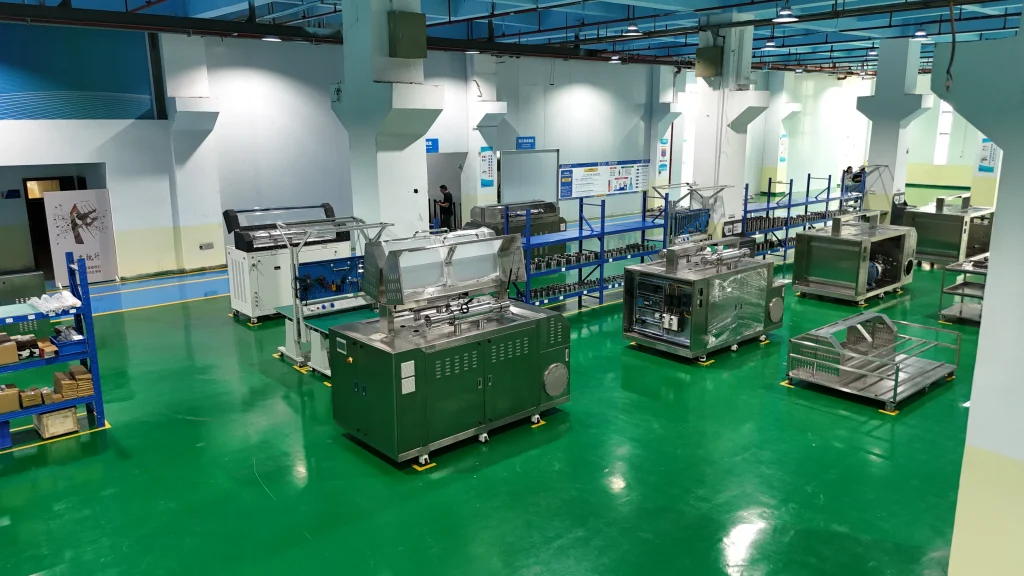
Advanced systems can generate pressures up to hundreds of MPa, enabling strong shear and impact forces required for nanoscale processing.
Precision Microchannel Design
The interaction chamber is a core component that determines processing efficiency. Diamond interaction chambers and optimized microchannel structures provide excellent wear resistance and consistent processing results.
Flexible Scale-Up Capability
From laboratory sample development to industrial production, equipment should support process transfer without significant changes in product performance.
This enables cosmetic companies to efficiently move from:
Formula Research → Pilot Testing → Commercial Manufacturing
Applications of Microfluidic Technology in Cosmetic Innovation
Microfluidic high-pressure homogenization is being applied across various skincare categories, including:
- Anti-aging products
- Facial serums
- Moisturizers
- Sunscreen products
- Hair care formulations
- Bioactive cosmetics
- Natural ingredient-based skincare
As cosmetic science continues to move toward biotechnology and precision formulation, advanced homogenization technologies will play an increasingly important role.
Choosing the Right Microfluidic Homogenization Partner for Skincare Development
For cosmetic manufacturers, selecting the right microfluidic homogenization equipment provider is essential. A reliable technology partner should not only provide machines but also support formulation development and process optimization.
A professional microfluidic homogenization equipment manufacturer should have:
- Independent R&D capabilities
- Core component manufacturing technology
- Application testing experience
- Flexible customization capabilities
- Technical support from laboratory validation to industrial production
At JUNJIE, we focus on providing advanced microfluidic high-pressure homogenization solutions for research institutions and industries including cosmetics, biotechnology, food, and advanced materials.
With independently developed core components such as high-pressure intensifiers, homogenization valves, and diamond interaction chambers, we provide complete solutions from experimental research to scalable production.
Conclusion: Driving the Future of Skincare Formulation with Microfluidic Technology
The demand for high-performance skincare products continues to push cosmetic manufacturers toward more advanced processing technologies. Microfluidic high-pressure homogenization provides precise particle control, improved stability, enhanced ingredient performance, and better product experiences.
Through advanced homogenization in the cosmetics industry and innovative microfluidization in skincare formulations, brands can develop more effective, stable, and competitive cosmetic products.
As the skincare industry moves toward precision formulation and biotechnology-driven innovation, microfluidic technology will become a key foundation for the next generation of cosmetic manufacturing.
