
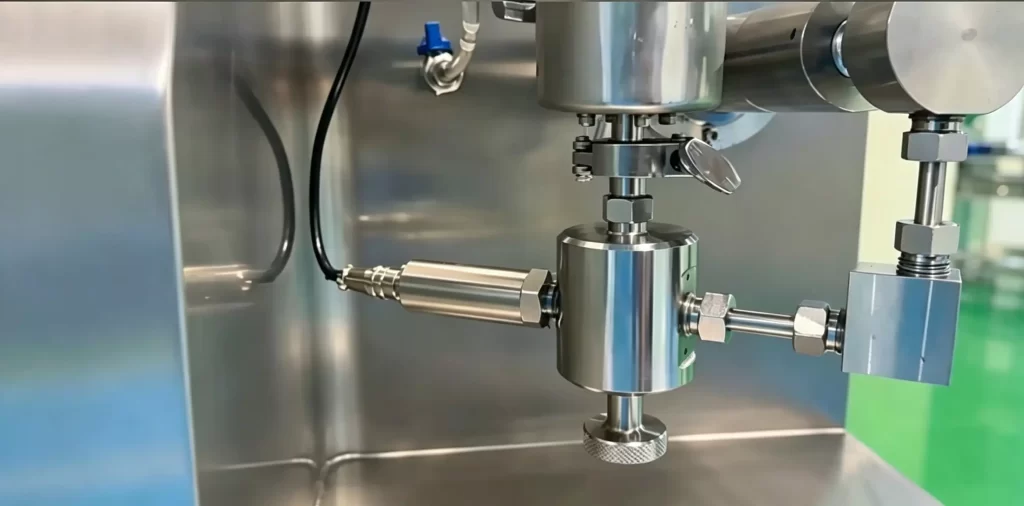
Nanoparticle processing demands more than simply applying high pressure. Whether the goal is to reduce particle size, break down agglomerates, improve dispersion, or produce a stable nanoscale suspension, the processing chamber plays a critical role in determining the final result.
In a high pressure microfluidic homogenizer, the interaction chamber is where the material experiences the intense physical forces responsible for particle disruption and homogenization. Among different chamber designs, the Diamond Interaction Chamber offers significant advantages for demanding nanoparticle processing applications because its engineered microchannel geometry can generate controlled, high-energy interactions within a highly localized processing zone.
For applications involving advanced materials, pharmaceuticals, lipid nanoparticles, food ingredients, cosmetics, and energy materials, the right interaction chamber can directly influence particle-size distribution, dispersion uniformity, process stability, throughput, and reproducibility.
This article explains how a Diamond Interaction Chamber works, why diamond-based interaction technology is valuable for nanoscale processing, and how it compares with conventional homogenization approaches.
What Is a Diamond Interaction Chamber
A Diamond Interaction Chamber is a precision-engineered interaction component used in high-pressure microfluidic homogenization systems. It contains specially designed microchannels through which a pressurized material is accelerated to extremely high velocities.
When the material passes through the microstructured interaction zone, several physical effects can occur simultaneously, including:
- High-velocity fluid acceleration
- Turbulence and intense shear
- Particle-to-particle collision
- Rapid pressure changes
- Cavitation-related effects
- Extensional and impact forces
- Agglomerate disruption
- Enhanced mixing and dispersion
Unlike a conventional homogenizing valve that primarily relies on a relatively large flow restriction, a microfluidic interaction chamber uses precisely engineered flow paths to create a more controlled processing environment.
The result is a combination of high pressure, controlled fluid dynamics, and localized energy dissipation that can be particularly effective for nanoparticle processing.
Why the Diamond Interaction Chamber Matters in Nanoparticle Processing
The pressure generated by a homogenizer is only one part of the processing system.
Consider a high pressure microfluidic homogenizer operating at several hundred MPa. The pressure must eventually be converted into useful processing forces. This conversion takes place largely within the interaction chamber.
Therefore, two systems operating at similar pressure levels may produce different processing results if their interaction chamber geometries, materials, flow paths, and energy distribution are different.
For nanoparticle applications, an effective interaction chamber should ideally provide:
- High and localized energy density
- Controlled flow geometry
- Repeatable particle-processing conditions
- Efficient agglomerate disruption
- Low contamination risk
- High wear resistance
- Consistent performance over repeated cycles
This is where diamond interaction technology becomes especially valuable.
Exceptional Wear Resistance and Purity: Eliminating Contamination at the Source
Advantages of Diamond Material: Diamond is the hardest naturally occurring material. Under ultra-high pressure of up to 420 MPa, materials pass through micron-scale channels at supersonic speeds, generating enormous erosion and wear on the chamber walls. Conventional stainless steel or alloy materials gradually wear under such conditions, potentially introducing metal impurities into the processed material.
The extremely high hardness of the Diamond Interaction Chamber makes it highly resistant to wear, fundamentally eliminating contamination caused by material erosion and ensuring ultra-high product purity.
Service Life and Cost: The diamond chamber offers an exceptionally long service life of up to 10,000 hours, significantly exceeding that of chambers made from other materials. Although the initial investment is relatively high, its long service life and low maintenance frequency substantially reduce long-term operating costs. This makes it particularly suitable for continuous production applications where equipment stability and material purity are critical.
Fixed Geometric Channels: Ensuring High Batch-to-Batch Reproducibility
In scientific research and pharmaceutical applications, data reproducibility is critical. Even a minor change in processing parameters can potentially lead to batch failure.
Fixed-Channel Design: Unlike homogenization valves with adjustable gaps, the Diamond Interaction Chamber uses fixed-geometry microchannels in a “Y” or “Z” configuration. This design ensures that every pass through the chamber subjects the material to highly consistent shear forces, collision forces, and cavitation effects.
Data Reproducibility: Fixed channel geometry ensures highly consistent processing conditions, providing excellent repeatability across different batches and processing times. For example, equipment from international brands such as Microfluidics relies on fixed-geometry channel designs, with data reproducibility expressed as RSD (Relative Standard Deviation) below 3%. This is particularly important for achieving linear process scale-up from laboratory R&D to pilot production and ultimately to large-scale manufacturing.
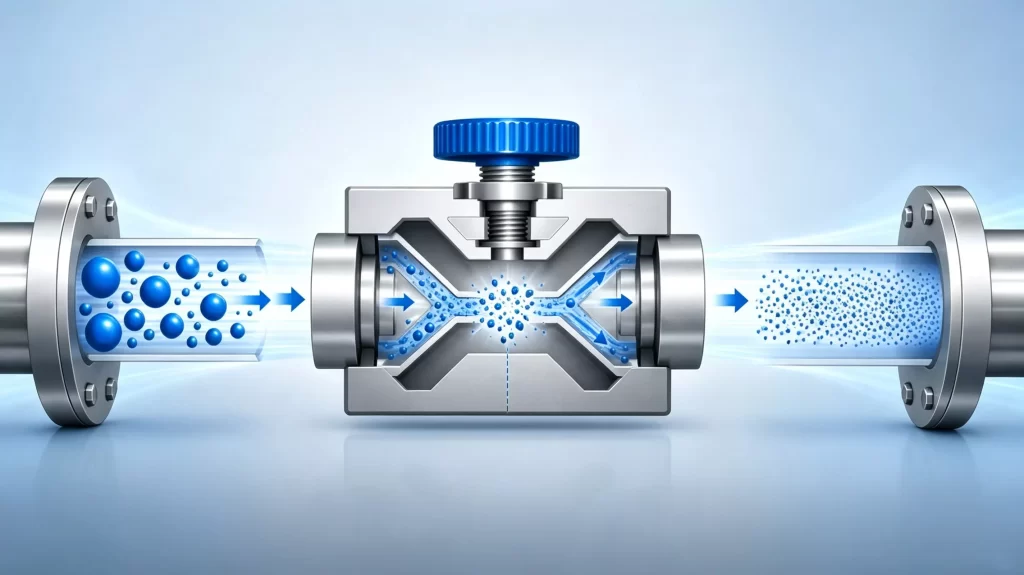
Powerful Synergistic Forces: Achieving Uniform Nano-Scale Dispersion
The strength of the Diamond Interaction Chamber lies not only in its material but also in its unique flow-channel design.
Three Synergistic Forces: Under ultra-high pressure, the material is accelerated to supersonic speeds before entering micron-scale diamond channels. Inside the channels, the material is simultaneously subjected to three synergistic forces:
- Intense Shear Force: High-speed flow generates enormous shear forces between the material and channel walls, as well as within the material itself, tearing apart large particles.
- High-Speed Collision Force: In the “Y” or “Z” channels, material streams collide head-on, generating tremendous impact energy that effectively breaks down hard agglomerates.
- Cavitation Effect: Rapid pressure changes cause bubbles to form within the material and collapse almost instantaneously. The resulting shock waves further break down and refine particles.
Result: The combination of these three synergistic forces enables highly efficient particle refinement to the nano scale, with exceptionally uniform dispersion and a very narrow particle size distribution. The Polydispersity Index (PDI) can typically be controlled below 0.12, a level of performance that conventional shear or mixing equipment cannot readily achieve.
Precise Temperature Control and Process Adaptability: Protecting Heat-Sensitive Materials
Many nanomaterials, such as liposomes, protein-based drugs, and probiotics, are extremely sensitive to temperature.
Optional Temperature Control Systems: The Diamond Interaction Chamber can be integrated with temperature-control systems such as internal cooling jackets or plate heat exchangers to achieve precise control of the material processing temperature. For example, bioactive materials can be homogenized at low temperatures as low as 4°C, effectively minimizing the risk of thermal inactivation or denaturation of active components.
Broad Material Compatibility: Whether processing high-viscosity colloids, solid-containing slurries, or heat-sensitive materials, the Diamond Interaction Chamber can achieve efficient and stable nano-scale processing by matching different pressure levels, flow-channel configurations, and temperature-control solutions. This enables a wide range of applications, from graphene exfoliation to liposome nano-sizing, while meeting diverse material processing requirements.
Better Reproducibility for Research and Scale-Up
One of the biggest challenges in nanoparticle development is transferring laboratory results into pilot and industrial production.
A process may work well at laboratory scale but become difficult to reproduce when:
- Throughput increases
- Processing time changes
- Material concentration increases
- Pressure conditions change
- Different batches are processed
- Continuous production is introduced
A precision interaction chamber can help establish a more controlled and repeatable processing environment.
For research institutions, this makes it easier to investigate the relationship between:
Pressure + Flow Geometry + Processing Passes + Formulation → Particle Size and Dispersion
For industrial users, repeatable interaction conditions can help reduce batch-to-batch variation and support process scale-up.
Suitable for a Wide Range of Nanoparticle Applications
The flexibility of high-pressure microfluidic homogenization makes Diamond Interaction Chamber technology relevant to many industries.
New Materials
Nanoparticle dispersion is increasingly important for advanced materials, including:
- Ceramic nanoparticles
- Metal oxide nanoparticles
- Carbon nanomaterials
- Functional coatings
- Composite materials
- Pigments and specialty additives
A high-pressure microfluidic process can help break down agglomerates and improve dispersion uniformity.
New Energy
Battery and energy-storage materials often require highly controlled particle dispersion.
Potential applications include:
- Electrode slurry processing
- Conductive material dispersion
- Nanomaterial processing
- Functional additives
- Advanced energy-storage materials
Consistent dispersion can influence slurry stability, coating uniformity, and downstream manufacturing performance.
Biopharmaceuticals
Microfluidic homogenization can also be used for nanoscale pharmaceutical processing, including applications involving:
- Lipid nanoparticles
- Nanoemulsions
- Drug-delivery systems
- Pharmaceutical suspensions
- Encapsulation systems
For these applications, controlling particle size and distribution is often essential for formulation performance.
Food and Cosmetics
Nanoemulsions and fine dispersions are increasingly used in food, beverage, cosmetic, and personal-care formulations.
High-pressure microfluidic processing can contribute to:
- Smaller droplets
- More uniform dispersion
- Improved physical stability
- Enhanced formulation consistency
The appropriate chamber design and process parameters should always be selected according to the specific formulation and product requirements.
Diamond Interaction Chamber vs. Conventional Homogenization
The key difference is the way processing energy is generated and distributed.
| Feature | Conventional Homogenization | Diamond Interaction Chamber |
|---|---|---|
| Flow structure | Relatively large-scale restriction | Precisely engineered microchannels |
| Processing zone | Conventional valve/chamber | Localized microfluidic interaction zone |
| Energy distribution | More dependent on valve design | Highly controlled through microchannel geometry |
| Wear resistance | Depends on valve material | Diamond offers exceptional wear resistance |
| Nanoparticle dispersion | Effective for many applications | Particularly suitable for demanding nanoscale processing |
| Process reproducibility | Depends on equipment design | Enhanced by precision interaction geometry |
| Advanced material processing | Application dependent | Well suited to demanding abrasive suspensions |
The comparison does not mean that every application requires a diamond chamber. Instead, the appropriate technology depends on particle characteristics, formulation properties, target particle size, throughput, pressure, and processing objectives.
How a High Pressure Microfluidic Homogenizer Works With a Diamond Interaction Chamber
A typical processing sequence can be simplified into four stages.
Step 1: Material Feeding
The feed material enters the homogenizer under controlled conditions.
The initial formulation may contain relatively large particles, droplets, or agglomerates.
Step 2: High-Pressure Intensification
A high-pressure intensifier increases the pressure of the material to the required processing level.
The pressure provides the energy required for rapid acceleration through the interaction chamber.
Step 3: Microfluidic Interaction
The pressurized material enters the Diamond Interaction Chamber.
The specially designed microchannels accelerate and redirect the flow, producing intense local interactions that can include shear, turbulence, collision, impact, and pressure-related effects.
Step 4: Nanoscale Dispersion
After passing through the interaction zone, larger agglomerates or droplets may be significantly reduced.
Multiple processing passes can be used when additional size reduction or dispersion is required.
The final result depends on the formulation and operating parameters, so process optimization should be performed experimentally rather than assuming that higher pressure or more passes will always produce better results.
How to Select the Right Diamond Interaction Chamber
Not every nanoparticle application requires the same interaction chamber.
When selecting a chamber, consider the following factors:
1. Target Particle Size
Define the required final particle size and particle-size distribution rather than simply selecting the highest available pressure.
2. Feed Material Characteristics
Important parameters include:
- Initial particle size
- Particle hardness
- Solid concentration
- Viscosity
- Agglomeration tendency
- Chemical compatibility
- Abrasiveness
3. Required Throughput
Laboratory research, pilot-scale development, and industrial production have very different flow-rate requirements.
4. Processing Pressure
The required pressure depends on the material and target result. Higher pressure is not automatically better if the formulation can achieve the required result at a lower processing intensity.
5. Number of Passes
Some materials may reach the desired result in a single pass, while highly aggregated systems may require multiple passes.
6. Cleaning and Maintenance
For pharmaceutical, food, and cosmetic applications, cleaning, material compatibility, and sanitary design can be especially important.
Building a Complete Nanoparticle Processing Solution
A high-performance interaction chamber is only one part of a complete nanoparticle processing system.
A reliable solution should integrate:
Feed System + Pressure Intensifier + Diamond Interaction Chamber + Control System + Process Monitoring + Customized Parameters
This system-level approach allows equipment parameters to be matched with the characteristics of the customer’s material and target process.
For research institutions, this can support formulation development and process optimization.
For industrial manufacturers, it can provide a pathway from laboratory validation to pilot-scale testing and commercial production.
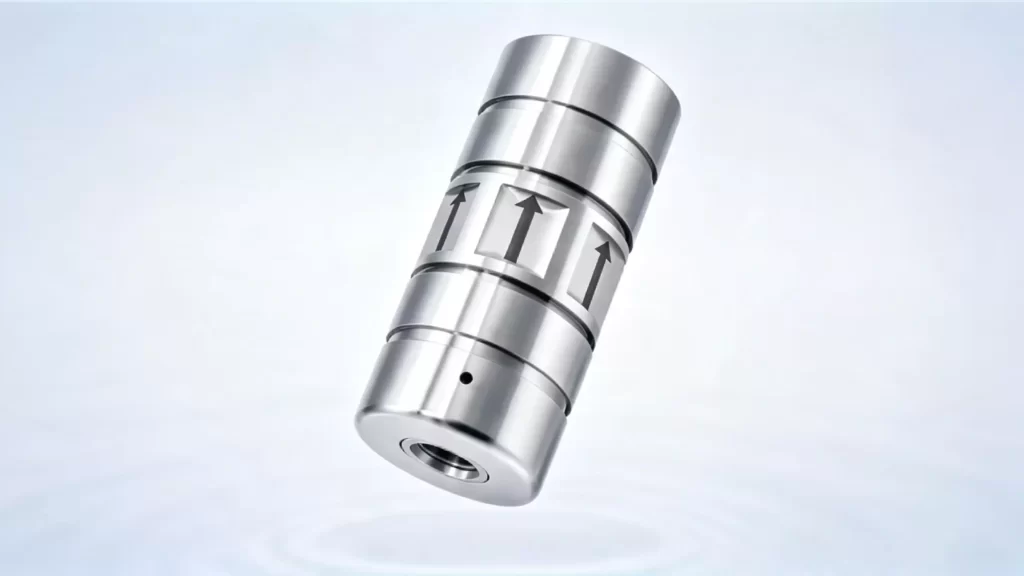
Why Choose a High Pressure Microfluidic Homogenizer With a Diamond Interaction Chamber
For demanding nanoparticle processing applications, the objective is not simply to generate extremely high pressure.
The real objective is to create controlled, repeatable, and efficient interactions between pressure, fluid flow, and particles.
A well-designed Diamond Interaction Chamber can contribute to this objective through:
- Precision microchannel geometry
- High wear resistance
- Efficient energy transfer
- Effective agglomerate disruption
- Improved dispersion uniformity
- Consistent processing performance
- Compatibility with demanding materials
- Strong potential for process scale-up
Combined with an appropriately engineered high pressure microfluidic homogenizer, it can provide a powerful platform for advanced nanoscale material processing.
Conclusion
Nanoparticle processing requires precise control over both energy and flow.
While the pressure-generating system provides the driving force, the interaction chamber determines how that energy is converted into useful processing effects. This makes the Diamond Interaction Chamber a critical component in high-performance microfluidic homogenization systems.
Its combination of precision microchannel engineering, high wear resistance, and controlled fluid interaction makes it particularly attractive for applications involving difficult-to-disperse or abrasive materials.
From new materials and battery technologies to biopharmaceuticals, food, cosmetics, and advanced chemical formulations, a properly engineered microfluidizer equipped with a Diamond Interaction Chamber can provide a scalable approach to particle-size reduction and nanoscale dispersion.
For organizations developing demanding nanoparticle processes, the best solution is not simply the machine with the highest pressure rating. It is a system in which pressure, interaction chamber geometry, materials, processing parameters, and application requirements are engineered together.